Show summary Hide summary
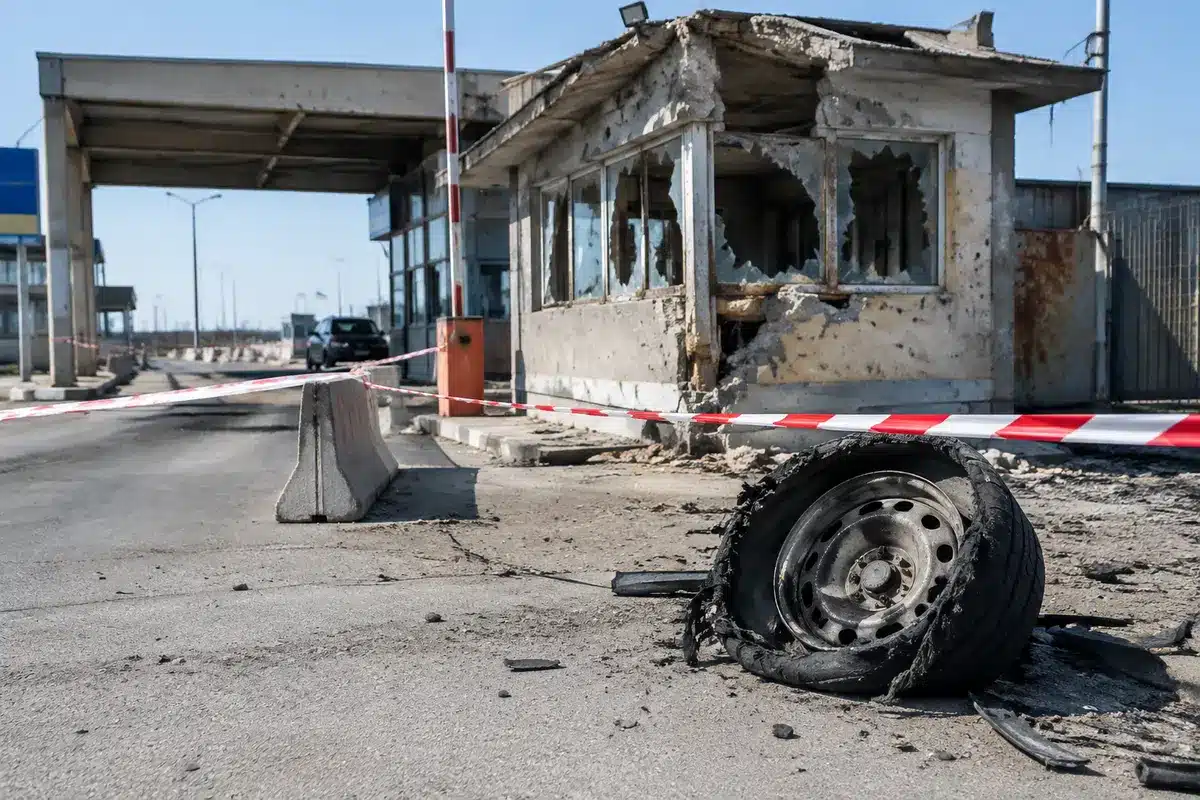
A bomb exploded on Tuesday morning in the El Escobal neighborhood of Cúcuta, Colombia, detonating at a DIAN customs complex beside the Francisco de Paula Santander International Bridge that links Cúcuta to Ureña, Venezuela. Authorities said the blast wounded at least seven people, most of them police officers, and prompted the immediate closure of the bridge to pedestrians and vehicles.
Blast struck a police staging area beside a school
Officials said the device detonated inside or near the DIAN installations, a spot used as a staging area for police assigned to monitor the international corridor. Norte de Santander’s Security Secretary George Quintero confirmed that officers were among the wounded. ABC News reported the explosion injured at least four police officers, a figure consistent with multiple official accounts that framed the attack as a deliberate strike against law enforcement.
Bombing near Colombia–Venezuela bridge raises tensions in Cúcuta after official’s killing
Stevens’s fiance will back Rogers rather than El‑Sayed, he says

Anti-explosives teams searched the area for secondary devices after the detonation. The explosion occurred adjacent to the Colegio Padre Luis Variara, a school where dozens of children were in class at the time, raising immediate concerns for civilian safety and prompting local officials to describe the situation as a humanitarian emergency. Journalist Jhon Jácome posted on X that the blast hit “next to the bridge” and “alongside the Colegio Padre Luis Variara, where dozens of children are in class at this hour.”
A resident identified by EFE as Griselda Becerra described the scene after the blast: “We heard an explosion that left us frightened, shaken. There’s a car… destroyed.”
Part of a weeks‑long pattern of violence
Authorities and security analysts said the bombing capped weeks of escalating attacks along Cúcuta’s border corridor. On October 26, Miguel Armando Castellanos Serrano — a retired police major who served as Cúcuta’s Secretary of Government from January 2024 to January 2026 and had been positioning himself for the 2027 mayoral race — was shot dead in a targeted ambush on the Anillo Vial Occidental highway. The killing drew condemnation from national politicians.
Earlier, on October 12, INPEC prison officer Bryan Rangel Saavedra was shot and killed in the same El Escobal area after finishing his shift at the Modelo prison; his attacker fled toward the Francisco de Paula Santander bridge and wounded an officer during an attempted interception. Authorities said a grenade also struck the Modelo prison that night. Local officials and security analysts have pointed to a sustained campaign of attacks on law‑enforcement infrastructure in the corridor, which they attribute to armed groups including ELN factions and transnational criminal networks operating across the Norte de Santander–Táchira border.
Political pressure and a reward offer
Congressional representative Juan Felipe Corzo, whose constituency covers Norte de Santander, called for urgent federal intervention following the bombing, urging the national government to match the scale of its response to the scale of the threat. The Norte de Santander governor’s office announced a reward of up to 50 million pesos for information leading to those responsible for the attack.
The Francisco de Paula Santander bridge is the primary formal crossing between Cúcuta and Venezuela’s Táchira state and is heavily used by migrants, traders and families. Officials warned that even a temporary closure disrupts commercial flows and compounds humanitarian pressures in a region already coping with large migrant and refugee movements.
Investigations under way
As of publication, no armed group had claimed responsibility for Tuesday’s bombing. Colombian security forces said they are treating the attack as an act of terrorism linked to organized armed activity in the border corridor and are investigating connections between the bombing, the October 26 assassination of Castellanos, and earlier attacks in the area.
Local and national authorities face pressure to step up security in the border zone, where officials say violence targeting public officials, law enforcement and civilian infrastructure has intensified over recent weeks.