
Show summary Hide summary
A TD Bank branch employee in South Florida pleaded guilty on October 6, 2026, to federal charges tied to a nearly two‑year scheme that routed roughly $4.8 million out of the United States to Colombia, the U.S. Department of Justice said. Gerardo Aquino, 40, of Hollywood, Florida, admitted opening fraudulent accounts, issuing hundreds of debit cards to co‑conspirators and manually overriding the bank’s own fraud controls; he faces a combined maximum prison term of 50 years when he is sentenced in March 2027.
How one employee turned access into a conduit
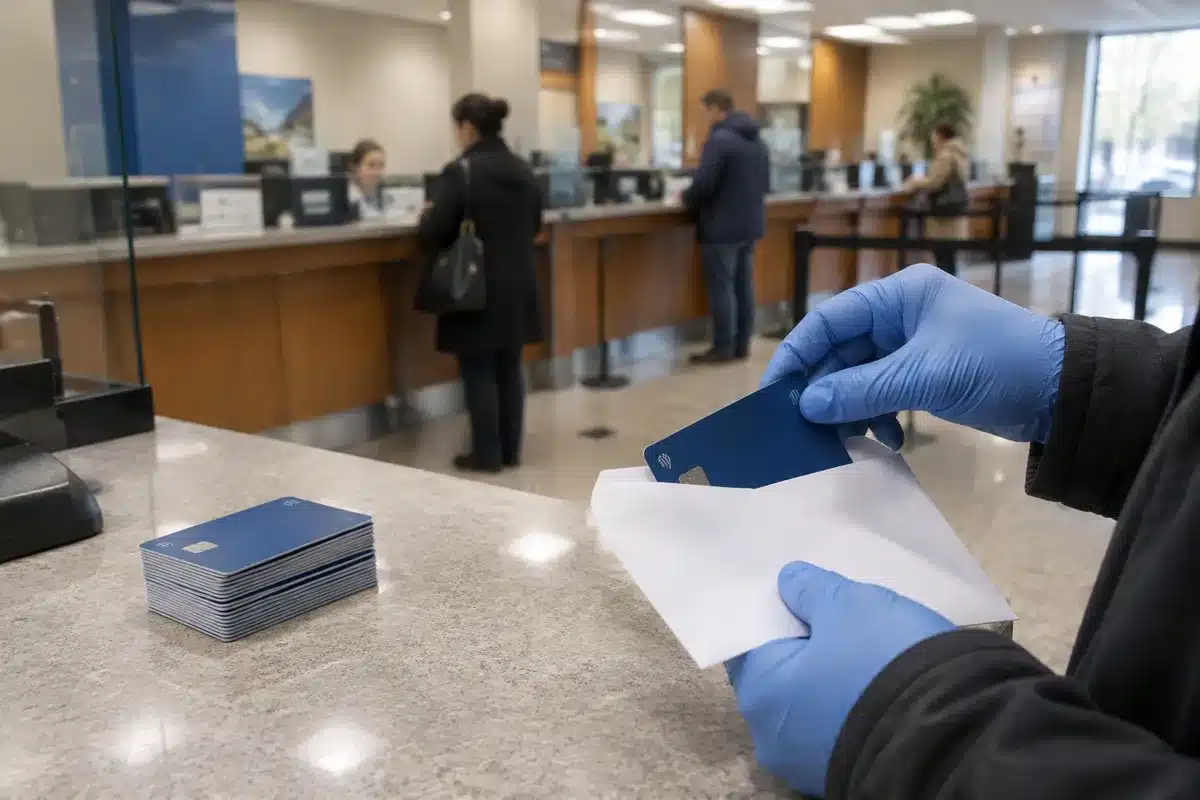
Court filings describe a straightforward but effective abuse of insider access. Between April 2022 and November 2023, Aquino opened dozens of customer accounts and distributed hundreds of associated debit cards to others in the scheme. When TD Bank’s automated systems flagged and froze suspicious activity, Aquino used his employee privileges to reverse those blocks, allowing the accounts and cards to continue moving funds abroad.
DCCC seeks ads criticizing GOP approach to AI and data centers across dozens of House races
Clock shows 2:57

According to the government, 86 accounts Aquino opened using the same Miami commercial address alone transmitted more than $3 million of the total $4.8 million that ultimately went to Colombia.
The payoff and the imbalance
For facilitating the cross‑border transfers, Aquino received just over $8,000 in compensation, paid partly in cash and partly through a peer‑to‑peer digital payment platform. That sum amounts to roughly $1.67 for every $1,000 laundered, underscoring a pattern prosecutors have noted in similar insider cases: employees who provide access typically take a small cut while enabling much larger criminal flows.
DEA Associate Chief of Operations Greg Millard, quoted in the Justice Department’s announcement, said the plea shows that “corrupt financial insiders are just as critical to criminal networks” as other actors who move drugs or provoke violence.
Charges, potential penalties and next steps
Aquino pleaded guilty to two counts: conspiring to launder monetary instruments (a charge carrying up to 20 years in prison) and receipt of bribes as a bank employee (up to 30 years). His sentencing hearing is scheduled for March 23, 2027, when a federal judge will weigh the U.S. Sentencing Guidelines and other statutory factors to set a term.
The prosecution is being led by the Justice Department’s Money Laundering, Narcotics and Forfeiture Section together with the U.S. Attorney’s Office for the District of New Jersey. The investigation was conducted by the Drug Enforcement Administration, IRS Criminal Investigation and the FDIC Office of Inspector General, with assistance from the Morristown Police Department, the DOJ said.
Context: part of a larger bank enforcement picture
The Aquino case comes while TD Bank remains under heightened regulatory scrutiny. In October 2024, the bank agreed to pay about $3 billion in penalties and entered a guilty plea after federal authorities found systemic anti‑money‑laundering control failures that allowed significant laundering across multiple years. That settlement identified three laundering networks that moved a combined $670 million through TD accounts and noted prior employee‑facilitated schemes that sent funds to Colombia.

As part of the settlement, TD Bank appointed Guidepost Solutions as a court‑ordered compliance monitor. The bank reported spending $507 million on anti‑money‑laundering remediation in fiscal 2025 and has operated under an asset cap limiting its U.S. expansion while compliance work continues, the DOJ’s announcement noted.
Insider threat and unresolved questions
U.S. Attorney Robert Frazer for the District of New Jersey characterized Aquino’s actions as providing “a soft entry point into our banking system for malevolent actors.” Assistant Attorney General A. Tysen Duva of the Criminal Division said the department treats insider exploitation as an enforcement priority: “these insiders will be investigated and prosecuted.”
The DOJ’s October 6 announcement did not say the broader inquiry into the network that benefited from Aquino’s conduct is closed. The involvement of the DEA and IRS Criminal Investigation led the department to caution that the Colombia‑bound transfers may tie to ongoing narcotics‑finance investigations beyond Aquino himself.
For TD Bank, each additional employee prosecution during its court‑ordered remediation period keeps regulatory attention focused on the strength of the bank’s internal controls and whether further insider‑enabled laundering will be uncovered.