Show summary Hide summary
A gas distribution pipe struck by a tunneling machine in Remedios de Escalada, a Buenos Aires suburb, ruptured on the morning of November 13 and triggered an explosion 68 minutes later that killed one person and injured 30 others, seven critically. Authorities are investigating whether a delayed public emergency response — after the contractor notified MetroGAS internally instead of calling municipal emergency services — contributed to the scale of the blast and fire, according to reporting by Latin Times.
How the accident unfolded
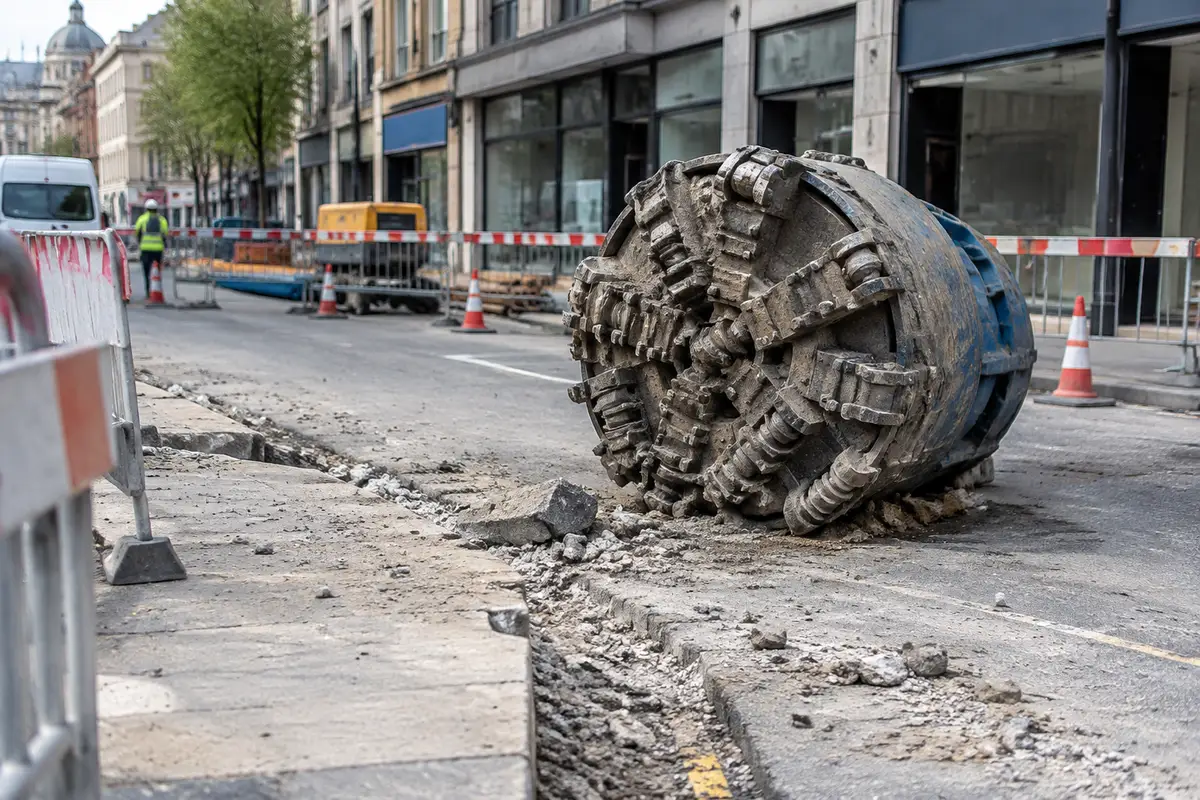
At 9:44 a.m. on November 13 a tunneling machine operated by contractor Exgadet ruptured a MetroGAS medium-pressure distribution pipe in the commercial center of Remedios de Escalada, in the Lanús district south of Buenos Aires. Workers contacted MetroGAS’s internal emergency line rather than immediately activating the local public emergency system, the report says. Gas accumulated in the area and ignited at 10:52 a.m. at the intersection of Coronel Beltrán and Del Valle Iberlucea, producing a large fireball that destroyed storefronts and damaged at least 28 parked cars.
MetroGAS criticized after Lanús gas pipe rupture kills one, injures 30; protocol failures cited
Fed’s favored inflation gauge climbed in September as Q3 GDP topped forecasts

Human cost and hospitalizations
The Municipality of Lanús confirmed one death and 30 injured, with seven in serious condition. Six of the critically wounded were taken to Hospital Interzonal de Agudos Evita and one to Hospital Narciso López. Among the most severe cases, one victim sustained burns across roughly 80% of their body and another arrived intubated. By Friday evening 10 people had been discharged and 13 remained under observation, the local authorities reported.
Concerns about the 68‑minute gap
Lanús Civil Defense Director Claudio Arale said municipal protocol requires immediate activation of the local emergency system when a gas pipe ruptures on public roads so water lines can be positioned and escaping gas dispersed. According to the reporting, municipal emergency services were not alerted until 10:52 a.m., while a MetroGAS spokesperson confirmed the company was aware of the rupture at 9:44 a.m. That interval is now central to the legal inquiry into whether response delays worsened the outcome.
Legal and regulatory response
Prosecutor Yanina Estévez, head of UFI N°6 descentralizada, ordered two MetroGAS executives held for preliminary questioning as criminal responsibility proceedings move forward; she later clarified the men were not formally arrested but would remain in that status during the preliminary stage. Argentina’s national gas and electricity regulator, the Ente Nacional Regulador del Gas y la Electricidad (ENReGE), said it is monitoring the case, is in direct contact with MetroGAS and has opened a formal accident audit to be placed at the disposal of the courts. Investigators are expected to examine the sequence of notifications and whether Exgadet and MetroGAS share institutional responsibility for the delayed public alert.
Containment and aftermath
MetroGAS crews worked for hours digging at both ends of the ruptured pipe before conditions allowed them to shut off the gas flow; the line was finally cut in the early hours of November 14, enabling firefighters to extinguish flames that had burned through the commercial district for more than 16 hours. Authorities evacuated the surrounding area during the emergency. Initial reports of two MetroGAS workers missing were resolved by Friday night when one was located and the other was identified as a false report, leaving no outstanding missing-person cases from the incident, Latin Times reported.
What investigators will focus on
Prosecutors and regulators are assembling a minute-by-minute timeline of events: when the tunneling machine struck the pipe, when MetroGAS was notified internally, and when municipal emergency services were or should have been activated. The answers, officials say, will help determine whether the explosion and the critical injuries stemmed from an unavoidable accident or from a failure to follow emergency protocol designed to prevent such outcomes.