[18-Jun-2019 12:17:42 UTC] PHP Fatal error: Call to undefined function add_action() in /home2/colombm8/public_html/wp-content/plugins/automatic-youtube-video-posts/core/admin.php on line 31 Santos Government Archives - Page 2 of 4 - Colombia PoliticsColombia Politics

Santos Government

La cosmética como objetivo de la política exterior colombiana

santoscameron

Guest piece by Miguel M. Benito

Indigna ver que, ante los errores y torpezas del gobierno en política exterior, los principales medios de comunicación del país, lejos de ejercer la sana crítica, aplauden.

Confundir apariencia y sustancia se ha convertido en una de las características de la política exterior del gobierno de Juan Manuel Santos. Como lo importante es parecer -o aparecer en la portada de la revista Time, por ejemplo- hay un interés desmedido y absurdo por camuflar imperfecciones, disimular defectos olvidándose de tomar decisiones, tener posturas consistentes y emprender reformas como la, tan necesaria, del servicio diplomático siempre pendiente. Con un gobierno en medio de todo y sin concluir todavía -casi- nada, se aspira a tener algo “bonito” que mostrar a los ciudadanos, mientras se espera algo que traiga un buen resultado en las encuestas.

Y la prensa se aviene al juego. Los principales medios colombianos son adictos al ‘gobiernismo’, al que rara vez faltan sea quien sea el presidente. Como la política exterior es un tema sensible se ha extendido la actitud de que no apoyar al gobierno siempre es traicionar a la nación. Así que las críticas a la conducción de la política exterior son tibias y muy escasas -si las hay-, mostrando otra vertiente de la baja calidad del debate democrático colombiano. Ensalzar siempre al gobierno parece la actitud general de los periodistas cuando de política internacional hablan. Aunque se trate de desatinos o de fracasos evidentes. ¿Recuerdan cómo se contó la Cumbre de las Américas de Cartagena? ¿Qué decir del tema del fallo de La Haya sobre el diferendo con Nicaragua?

En este ambiente de complacencia cuando el presidente Santos comente la imprudencia de hablar de la incorporación de Colombia a la OTAN (de algún modo, trasunto en lo militar de la vanidosa intención de ser miembro de la OCDE), la prensa acude al rescate. Y si las declaraciones mal medidas, poco sopesadas y, desde luego, irreales, los artículos lavándole la cara al gobierno resultan bochornosos. El mayor exponente de esto fue el artículo titulado “Relaciones internacionales: ¿Cicatrices abiertas?”, aparecido en el no 1623 de la edición impresa de la Revista Semana (10 a 17 de junio de 2013; aquí enlace de internet: http://www.semana.com/nacion/articulo/relaciones-internacionales- cicatrices-abiertas/345784-3). La defensa es tan torpe que se vuelve contraproducente.

Lean el siguiente párrafo: “¿Qué llevó a Santos a una metida de pata tan innecesaria? El presidente está obsesionado con sacar al país del tercer mundo, eso no significa que lo pueda meter en el primero que es lo que trata de proyectar con frecuencia. A él le interesa que Colombia forme parte de los clubes del mundo civilizado en los cuales aún no está, o que sea presidente de los que ya es miembro.”

Muchas cosas se podrían comentar al respecto, pero a bote pronto, si el objetivo de Juan Manuel Santos es sacar al país del “tercer mundo” -y que conste que no lo dudo- ¿el simple ingreso en la OTAN supondría la incorporación al “primer mundo”? Supongo que el estado la educación, la sanidad, las infraestructuras y la articulación territorial no tienen nada que ver ¿no?

Pero si algo mueve al enojo es lo de “los clubes del mundo civilizado”. De esas palabras brota neocolonialismo y desprecio en estado puro. ¿Si uno sale en la foto con Merkel es civilizado, pero si está con Humala no?

Indigna ver que, ante los errores y torpezas del gobierno en política exterior, los principales medios de comunicación del país, lejos de ejercer la sana crítica, aplauden.

Así es como se consigue tener una política exterior propia de reinado de belleza. Pero perfectamente maquillada, eso sí.

Miguel M. Benito – Analista Político – Internacionalista. Máster en Diplomacia y Relaciones Internacionales. Candidato a Doctor en Seguridad y Paz. Docente de la Universidad Externado de Colombia en áreas de Relaciones Internacionales.

Picture, El Tiempo

Colombia´s Santos visits United Kingdom

Londres 02 copia

Colombia President Santos arrived in the United Kingdom today for a two-day trip where he met with Prime Minister David Cameron to discuss ways to increase trade links between the countries as well as the often thorny issue for Colombia of human rights.

Speaking at a press conference this morning after meeting with the British Prime Minister, Santos paid homage to the support that the UK has offered in the peace process calling relations between the countries as being at the “best time in its history”.

Santos highlighted that Colombia had doubled its trade with the UK since his last visit two years ago and that the free trade agreement with the European Union – finally ratified by the Colombia Congress yesterday – would help this growth to continue.

Also, among this issues discussed was that of bilingualism, through which President Santos expressed his Anglophilia by saying he wanted Colombia to become a “centre of bilingualism” in Latin America, one imagines by increasing the standard and number of English speaking Colombians.

After meeting the Prime Minister as well as Foreign Secretary William Hague and Minister of State Hugo Swire, Santos later visited Oxford University where he joined representatives from a number of countries across the globe to launch a joint scheme with the university   that will help emerging countries tackle poverty through the creation of a peer-to-peer network.

Speaking at the visit, Santos boasted his record on the economy by claiming that two million jobs have been created since he took office in 2010. He also spoke of his record on tackling poverty and income inequality, stating that Colombia’s Gini coefficient – the standard measure on economic inequality – has fallen from 0.56 in 2010 to 2012 0.539.

Perhaps of note to Santos in this aspect is that this is the highest in the exclusive club that Colombia is about to join – the OECD.

Santos will meet with Prince Charles tomorrow after speaking at an event hosted by the Financial Times.


60% of Colombians against President Santos re-election

Sabanalarga Educación 03

Colombia President, Juan Manuel Santos faces an uphill struggle to secure his re-election in May 2014 with a poll this week released by Datexco revealing that just a quarter of Colombians would vote to keep in him the Casa de Nariño until 2018.

Opposition to the president´s government is growing, while support for his handling of the economy has plummeted, with just a third believing the nation´s finances are improving and a palty 20% approving of his measures to combat unemployment.

In fact, there is very little for Santos to cheer in the results which show citizen confidence in the administration´s totem issues is at an all time low. On security, just a third give the commander-in-chief a thumbs up, while only roughly the same number are confident of a succesful outcome to the Havana peace talks with the FARC.

On health over 70% of Colombians disapprove of the government´s work, while two thirds oppose policies on both the guerrillas and paramilitaries.

Polling is notoriously unpredictable in Colombia and different polling companies can often produce quite different pictures of the nation´s voting intentions. Nevertheless, the president´s top team should be worried as the Datexco figures come hot on the heels of the news that over half the nation is pessimistic about the direction in which the country is going.

And whether or not Datexco is within the margin of error is also largely irrelevant as Santos´inner circle will know well that this latest set of projections follows a trend.

When Santos entered the presidential palace his approval ratings were even higher than those enjoyed by former president Alvaro Uribe, with almost 90% behind the direction of the new government. But Santos´ popularity has been in virtual free fall since early summer last year when his government was heavily criticized for its failed attempt to reform the justice system. Sure, support picked up in August and September when Santos told the nation of his plans to enter into peace talks with the terrorist FARC guerrillas, but the president´s popular appeal quickly began its seemingly irreversible downwards trend in October/November when the talks began.

Colombia Politics´ view

Santos knows he cannot rely on public backing alone to keep him in power. He must use the full resources of the state, and he must rely on footsoldiers to conjure up the votes. Little surprise then that he announced two days ago his support for a plan put forward by governors and mayors to extend their term from four to six years.

Santos has said he will take the proposals to congress, with his backing. What better way to secure the much-needed support of regional politicians ahead of the electoral battle next year than give them such a coveted prize? What better way of encouraging these important local – and vote-winning – figures to line him up votes?

If Santos can bring together a major coalition of politicians he will be almost impossible to remove from office. I´ll scratch your back if you scratch mine, he appears to be saying.

Polls, public opinion…who cares? Votes are what counts, wherever they come from.


Colombia President Santos´ six year itch

3c9c1759a287c58451a14438df87e803

Bogota, Colombia´s President Santos yesterday promised to bring forward a law to extend presidential and local government terms from four to six years.

Santos, speaking to regional political chiefs gathered in the Atlantic port city of Cartagena, promised to present to his national unity coalition in congress a set of proposals that would change the constitution, prohibiting the re-election of presidents, but extending by two years, their time in office. The measures would also apply to governors and mayors who complain four years is too short a period in office.

The president argued that were the law to be passed by the legislature he would, in the event that the sought re-election in 2014, be prepared to served a shortened, two year period, taking his overall years in charge of the nation to six.

The announcement appears to have taken the Colombian political world by surprise, and its indicates the advanced nature of Santos´ re-election plans.  The president said:

“I´m the first to recognize that four years is very little time for mayors. I think that six years is the ideal period, hopefully for all.”

“If I stand for re-election it´d be for two further years and from that point onwards all future presidents would have six year terms – without re-election.”

Santos also proposed to chronologically align the elections of the congress with those of the governorships and mayoralities, perhaps with a view to reducing the cost to the state of elections held in different years.

The proposals will now be taken to the directors of the parties of Santos´coalition before being considered for presentation to the legislative chambers.

Colombia Politics´ view

That Santos is to run for re-election is an almost cert, but that he could only serve effectively half a term is a potentially significant development. Santos has gone on record as saying that he will seek to govern only until he has secured the peace in Colombia.

Were he to have a platform of two rather than four years he could easily work through any law or constitutional changes that were to emerge from the peace process currently underway with the FARC in Havana.

It would also allow him to go to the country on an almost exclusive peace seeking platform. Elect me for two years and I´ll hand over a country on the way to peace, he could say.

Two years, 24 months, is an extremely short period of time, and it may allow Santos to avoid conjuring up a series of promises that deal with the problems affecting the nation beyond the issue of peace. In effect, he can leave that up to the chap who replaces him.

One other dimension is that it keeps ambitious ministers like German Vargas Lleras quiet. Vargas is almost certain to run in 2018, as the Santista candidate, but is a terribly kept secret that he would really rather like to be in the presidential palace come next year, but is almost prevented from doing so because of his subordinacy to Santos. Where he to have the promise of Santos´endorsement in only two years´time, well that would be a very attractive prospect indeed.

Watch this space.

President Santos needs help, and fast

b9547ece-5096-413c-bc58-1a648dd5d398_zps51f63174

Ask yourself this question. How many faces of Juan Manuel Santos´ cabinet do you recognize? Be honest. One, maybe? Two, perhaps? I´m guessing even the hardiest of politicos would struggle to name more than three or four.

With the exception of the Vice President Angelino Garzón, the Defence Minister Juan Carlos Pinzón, and housing minister Vargas Lleras, the government´s top team is largely anonymous. This is bad for democracy, bad for the government, and potentially life threatening for Santos´ re-election hopes.

Last August JMS shook up his team.  He was responding to a dramatic fall in public confidence in him following the Justice Reform bill debacle.  That reshuffle, however, has had very little positive effect in terms of public opinion. The current crop of ministers might be good bureaucrats, they might even be decent law makes, but politics is also about message, about communication and leadership. And in this area they are falling dramatically short.

We know that Santos is acutely conscious that his government is failing to communicate. So why does he stick with a team that appears camera shy? Mr President, how often do your ministers take to the airwaves either to make or defend their case?

When was the last time we heard your transport minister speak, for example? Infrastructure is one of Colombia´s most pressing concerns, yet I can´t remember a time when Cecilia Álvarez (no, I can´t picture her face either) appeared on TV or radio to tell us what she´s doing about it.

What too of your health minister Alejandro Gaviria, of whom we all had high hopes? Sure, he appeared on television once or twice last month to announce his new reform but has since appeared to scuttle back to the corridors of power.

And your interior minister, or your justice minister, do we know anything of them? Who has come out to promise change in the appalling conditions in our prisons? Where are the announcements on measures to curb the corruption that´s putting a huge break on the nation´s economic development and scaring off inward investment?

The time has come Mr President for you to bring out the knives.

Santos needs a new cabinet of real politicians – not bureaucrats. He needs campaigners; people who will defend and fight for the government. All successful governments rely on “hard nuts”, “bruisers”, “heavy weights” to retaliate and lay some punches on the opposition.

At the moment the opposition is having all the fun. Uribe and Robledo on the right and the left respectively are running rings around the government. And if the campaign is already nasty, it´s going to get a lot worse once the Uribistas have chosen a candidate for the 2014 fight.

Santos cannot afford to stick with the political deadwood if he wants to be re-elected.

The problem with the cabinet is not just that it is full of – in the eyes of the public – nobodies. It is also far too Bogotano. The President needs urgently to find some regional faces.

Senator Amando Benedetti has called this the “Country club” cabinet in which the ministers “speak more English than Spanish”. For critics, Santos has surrounded himself with his mates, with a Bogotá-centric-strato-25 elite that has more in common with we Europeans and North Americans than with a family from Pasto, Popayán or Putumayo, Montería, Manizales or Mitú.

So If Santos´ team is seen as being out of touch with the nation, how can it hope to fight for votes? Especially so when you consider that Uribe´s real strength is in the countryside, across the regions. He could hoover up support here while Santos retreats to his urban, liberal base.

This, Santos´ third year in office, is supposed to be one of results. Traditionally the legislature is slow as politicians start to return to their bases to whip up support for the forthcoming election fight. So now more than ever Santos needs a group of politicians – a team – ready and able to go out and sell the government´s achievements.  He doesn´t need law makers, he needs communicators.

If Santos were a caudillo his cabinet wouldn´t matter. If Santos were even an Obama, or a Clinton, or a Blair perhaps it wouldn´t matter, either. But for all his qualities, Santos is not a politician for the media age.

If Santos´ advisers can´t see that the very worst thing for this president is to force him to struggle on with a cabinet that has zero public profile then they should be sacked. He needs help, and fast.

It´s premature to suggest the Santos Presidency is in danger of going out with a whimper; after all he still holds most of the bureaucratic cards. But unless changes are made to the top table, the ride will be unnecessarily bumpy and journey´s end unnecessarily difficult to predict.

This article was commissioned by The City Paper.

Popularity contest or solution to Colombia´s housing for the poor?

1 santos

On Saturday I read in El Tiempo that the Ministry of Housing tops the polls with the most popular minister in President Santos´cabinet. I’d like to know why? What makes this person the most successful minister, or at least the most popular? Who did they ask when they did the survey? Does anybody know?

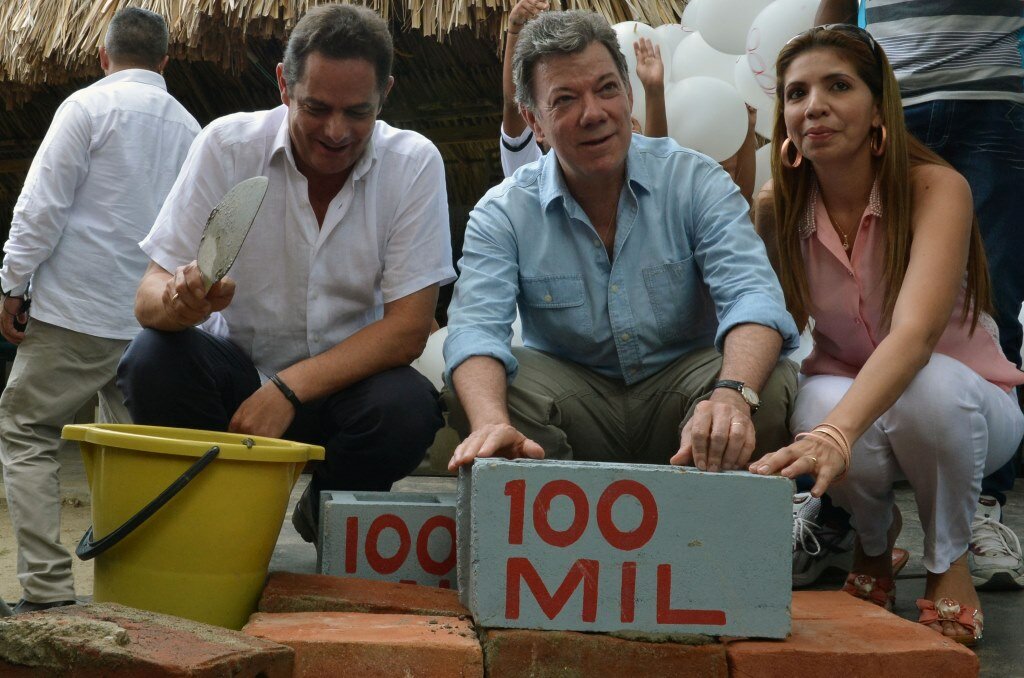
All I know about the Ministry of Housing is that it is behind a project to give away for free 100,000 houses all over Colombia. But what was the intention of the creation of this ministry beyond this project?

What is its mission, and what purpose does it serve the nation to have created such ministry?

In the same newspaper I see editorials that ring the alarm for the authorities to prepare for the coming rainy season. They say the State should be taking action, helping to move entire populations who currently live on dangerous or unsuitable lands.

Isn´t this a housing problem? Has the Ministry of Housing taken action? Has this ministry done anything to resolve this? Has it even taken a position?

Someone else will soon be in charge of the ministry now that German Vargas Lleras looks set to leave office for political reasons. I suppose to reap the ground that he has soiled. But what has his legacy been? Why is he so “popular”? Has any long term State Policy been drafted with regards to the issues mentioned above or any others…?  Can anybody help enlighten me a bit?

Correct me if I am wrong: the president created this ministry to assist in their plan of giving free housing to people in diverse parts of the country, and Vargas Lleras has been very diligent in doing so; showing up as the giver of free homes to the poor.

In my mind, this looks very similar to the assisting model of the Bolivarian Revolution, where they don’t teach people how to fish; they give them the fish and just wait for people to remember such “generosity” when election time arrives. Next year is election year in Colombia. Is it a coincidence?

Am I missing something here? I suppose I am because nobody in the media, that I’m aware of, has raised their eyebrows. It must be perfectly legitimate to open up a ministry to give homes away and then walk away with political aspirations having earned a “favorable image”.

In my last article I wrote about the importance of education to help change the culture in the country and make for more accountability and empowerment, so continuing with that idea, I wouldn’t oppose to a plan where in coordination with the Ministry of Education, people were trained on the skills necessary to learn to build homes, and schools and hospitals, maybe through Sena.

The Ministry of Housing would run a study to determine which the better places for human settlements would be and, in coordination with the other institutions that would have a say, help build the new towns in those areas that have been so depressed due to the acuteness of the violence problem.

After all, if they are giving back the land to those who used to possess it, wouldn’t it be only logical to plan the right way to give this people the chance to get back their lives?

So what of the Ministry for Housing? Was it just set up for Vargas Lleras? Will we see a new minister with a new set of promises? Colombia´s housing problems are complex and grave. The new houses are just a start, a drop in the ocean. A long term strategy is required, a strategy that worries less about popularity and more on what´s in the nation´s long term benefit.

Video – Santos´ invisible and elitist cabinet

Colombia Politics editor Kevin Howlett´s videocast.

He looks at why President Santos´ cabinet is failing to communicate with the country.

Are they a group of technocrats?

Do they belong to an elite, out of touch with modern Colombia?

Are they real politicians?

For more information, contact Editor Kevin Howlett.

Email: kevinhowlett@www.colombia-politics.com

Subscribe to our You Tube channel.

President Santos set to announce re-election bid in summer

presidente-santos

Colombia President Juan Manuel Santos will leave us waiting until June to confirm his intention to run for re-election in 2014 it was revealed yesterday.

In a Colmundo Radio interview the president set the summer date hoping to end the constant speculation that had surrounded the timing of his announcement. Theoretically the president had until November to say either way, but Santos has chosen to bring this forward to avoid a possible clash with the scheduled announcement of the end of peace talks with the FARC.

The peace talks, currently underway in Havana, are due to conclude not before the autumn and Santos’ move is designed to decouple his bid to remain in the Casa de Nariño Presidential Palace from the negotiations with the terrorist group.

The reality is of course that whether the president likes it or not, his political future is inextricably linked to the process in the Cuban capital. Many believe that the only thing that stands between the president and a second term is a possibly disastrous conclusion to the talks.

Few expect them to break down, but even if they do, Santos will be able to manage his way out of all but the most unpredictable of situations. Should the FARC break ranks and launch a series of brutal attacks or should they take out a leading politicians while talks are underway, for example, Santos might struggle to avoid severe castigation at the polls. But otherwise he will not be seriously untroubled. Santos must control the talks even if that means bringing them to a premature end if the FARC appear not to be playing ball.

So why is the election so much within the gift of the president?

In a recent interview, Green Party Senator John Sudarsky told Colombia Politics that Santos has the election all but wrapped up because of the institutional power and patronage available to the president’s office.

Parliamentarians have danced to Santos’ tune since August 2010 – with over 90% of congress aligned to the coalition administration – and the majority are expected to stay on the president’s ticket, returning him large swathes of the country, and giving him the necessary votes to cancel out the efforts of a challenger.

To Sudarsky, and to many others, Colombia’s democracy is clientelist and bureaucratic meaning power remains in the hands of he who already has it.

But it’s also true that Santos’ voter popularity remains relatively high, despite a difficult year in office. Before 2012 began Santos’ approval ratings were sitting pretty, between 70 and 80%.

The numbers who view his administration positively are now hovering around half of the electorate. Yet despite the alarmist calls from many within the Colombian media, it is difficult to conclude that this figure is entirely calamitous for a president about to embark on his third year in office.

And if you were worried about Santos’ popularity, well 2013 will be  year where the administration attempts to point to “delivery” to the positive effect the new laws passed in the period 2010-12 are having on the society.

Expect this year and next to read like a long list of new houses build, record employment numbers, record numbers lifted out of poverty, land returned to victims, murder rates lowered, economic growth.

Santos may even borrow the line from his old friend former British Prime Minister Tony Blair who once famously campaigned on the slogan, “Lots done, lots still to do”.

Will support creep up? Possibly so. Where Santos ends up in 2014 and what sort of congress he has to work with will depend on how well the results are communicated and how much the electorate feels they are benefitting from them.