Show summary Hide summary
Debate over commercial deployment of fully autonomous vehicles has intensified, with local politics, labor unions, safety data and federal rules all cited by opposing sides. The material provided to this article describes a recent D.C. council defeat of a bill to legalize commercial driverless taxis, but also points to exemptions granted to companies such as Zoox and safety comparisons that supporters say favor firms like Waymo.
Local politics and labor opposition
According to the supplied material, Washington, D.C., lawmakers voted down a proposal to legalize commercial autonomous vehicles amid pressure from organized labor. The texts contend unions rallied against a robotaxi bill that, the material asserts, already contained provisions favorable to labor — and that critics warn riders would ultimately pay in higher fares and what the pieces describe as “more dangerous roads.”
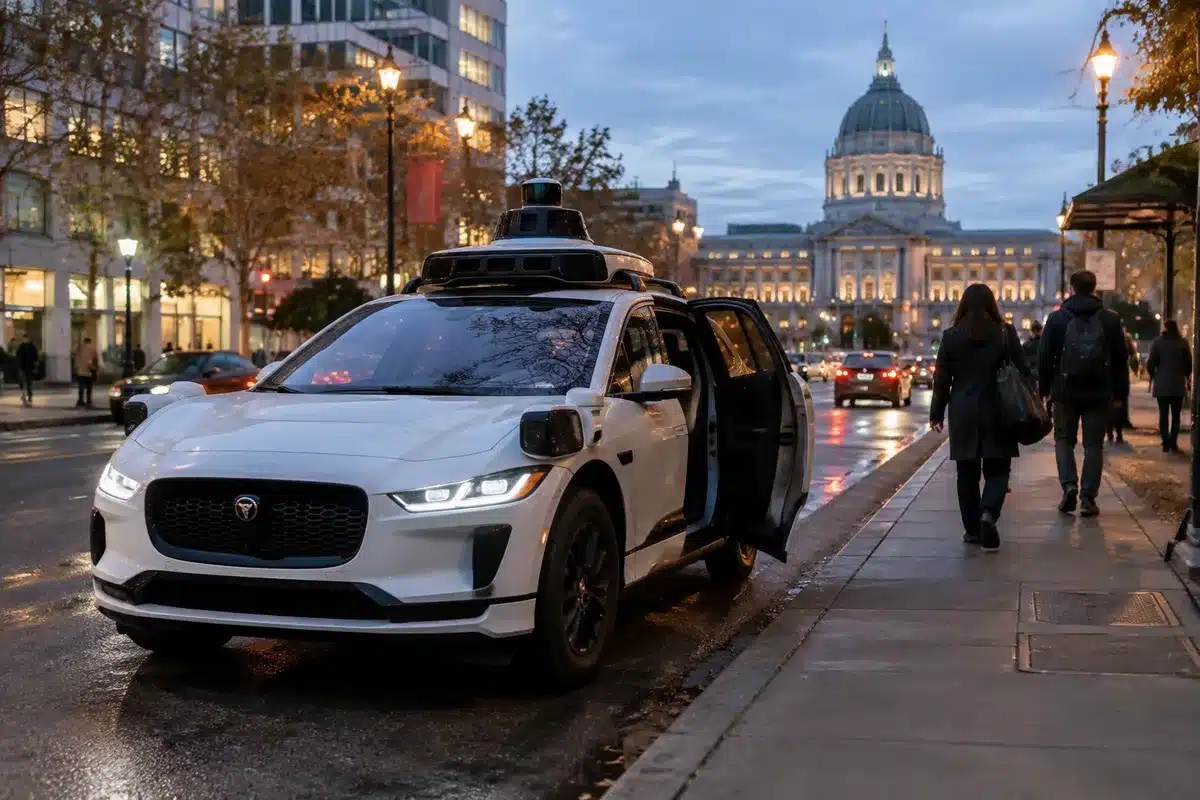
Self-driving vehicles operate without a human driver
Stellantis orders recall of 82,000 Ram pickups after ABS software glitch

The material also highlights comments attributed to a “socialist D.C. council member” who expressed concerns that autonomous vehicles could reduce employment; the author of the material disputes that claim, saying automation will both destroy some jobs and create others.
Safety record, incidents and competing interpretations
Supporters of wider testing and deployment point to safety data cited in the material, which says Waymo has “far fewer bodily injury and property damage claims” compared with conventional services. The provided texts argue that simplifying rules and allowing more testing could save lives on highways, and that holding vehicle systems to more stringent standards than those applied to human drivers may be counterproductive.

At the same time, the material recounts several incidents that have intensified scrutiny. It notes an accidental death of a cat in San Francisco that prompted calls in some quarters to ban Waymo services, and describes a high-profile Arizona crash involving an autonomous vehicle program where the supplied material reports investigators found two human drivers were at fault and at least one ran a red light.
The pieces make a clear distinction between individual accidents and aggregate outcomes, arguing that “one tragic, accidental death should not stop” autonomous vehicle testing and stressing that conventional cars have long avoided FDA-style regulation.
Regulation and federal barriers
The supplied material points to regulatory friction at multiple levels. It notes that Zoox secured what is described as the first commercial exemption for a driverless car, accompanied by the company’s pledge that safety regulations would evolve “as Zoox’s technology advances.” The National Highway Traffic Safety Administration (NHTSA) is also mentioned as applying higher standards to autonomous systems than to human drivers, an approach the material criticizes.
An “obscure federal rule” is singled out in the material as slowing wider adoption, and the texts report that tepid attempts to loosen federal regulation have run into senatorial resistance. The material further states that regulations have made autonomous vehicles more expensive and, in the authors’ view, less safe.
Industry players and technical debate
The supplied items name multiple industry actors and innovators. Waymo and Zoox are referenced as leading robotaxi efforts; Uber’s self‑driving project is noted in historical context, with the material saying that after a fatality the company reorganized some safety-monitoring roles. Startups and independent builders are also discussed: Comma.ai is described as aiming to make plug‑and‑play autonomy affordable, and entrepreneur George Hotz is mentioned for developing a lower‑cost autonomous driving system that runs on a smartphone.
Those pieces frame the broader technological debate as one between large companies and venture capital on one side and labor, municipal regulators and skeptical politicians on the other. The material also raises the prospect that autonomous systems may be judged more harshly than human drivers, citing research “conducted with sitting judges.”
What the material says is at stake
Across the supplied subheads and summaries, the authors argue that the stakes include public safety, employment shifts, regulatory burden and the pace of innovation. The material repeatedly emphasizes that broader testing and clearer, lighter-touch rules could accelerate deployment and_save lives_, while opponents emphasize job protection, pedestrian safety and the need for tighter controls.
Readers should note these are positions and interpretations drawn from the provided content; the pieces combine factual claims about exemptions, incidents and regulatory actions with opinionated assessments of their implications.