Show summary Hide summary
Columbus Day, once a celebration of Italian-American pride and a federal observance honoring Christopher Columbus, has become a flashpoint for competing identity narratives, the supplied commentary argues. The piece traces how the holiday’s meaning shifted over time — from early patriotic observances and a rallying point against anti-Italian prejudice to a contemporary arena where debates over colonial violence, Indigenous recognition and ethnic pride play out in politics, popular culture and public holidays.
How the holiday began and evolved
The commemorations now associated with Columbus Day have roots that stretch back to local observances in the 18th century, the commentary notes, but the holiday’s modern incarnation grew in the 19th and 20th centuries. Washington Irving’s highly fictionalized 1828 biography helped recast Columbus as a proto-American hero, even though Columbus never set foot in territories that later became the United States.
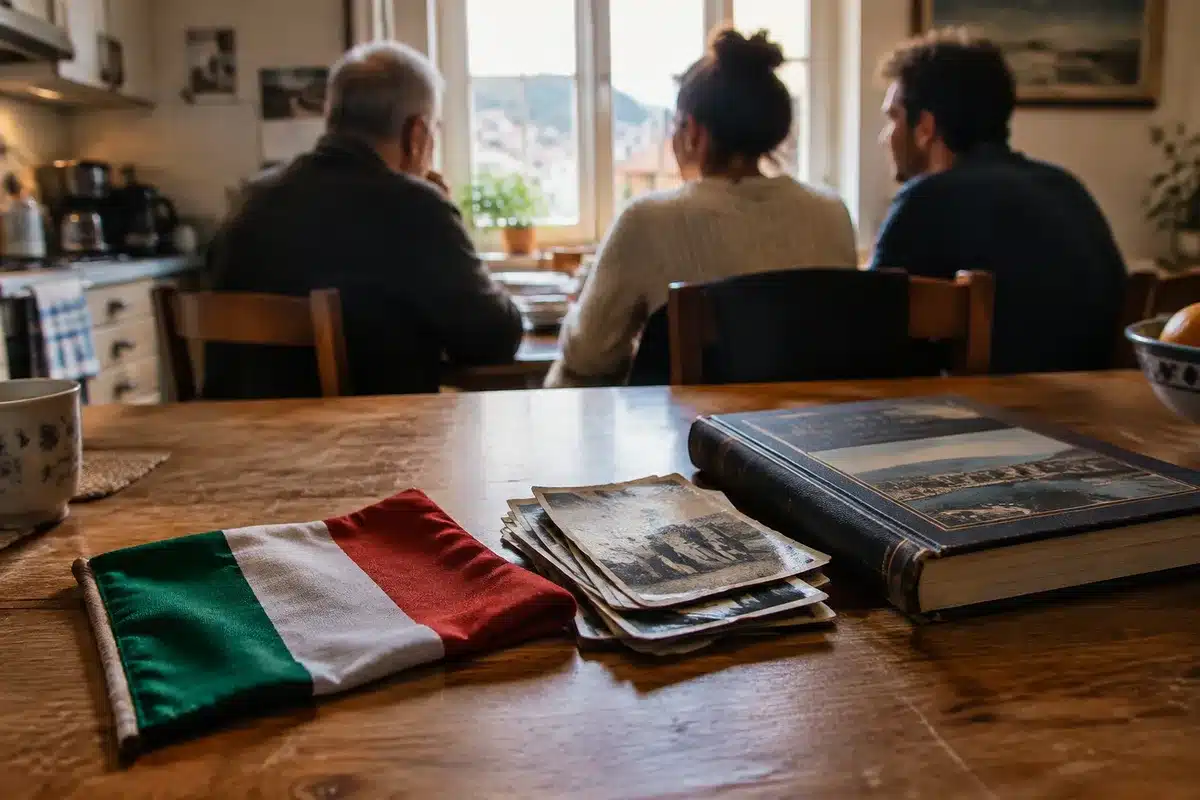
An Italian American says they do not celebrate Columbus Day
Pentagon said to be negotiating with GM and Ford to expand U.S. military drone production

The first federal proclamation tied to Columbus came in 1892 under President Benjamin Harrison, in part as a response to anti-Italian violence and in the context of a growing wave of Italian immigration — about 4 million Italians arrived in the United States between 1880 and 1920, the piece recounts. That era also featured explicit anti-Italian sentiment in American media and public life: the commentary cites a New York Times editorial denigrating Sicilian immigrants after the 1891 New Orleans lynchings and references Theodore Roosevelt’s contemporaneous private remarks and the role of nativist, eugenicist thinking in pushing restrictive immigration laws culminating in the 1924 Johnson-Reed Act.
By the 1930s, pressure from groups such as the Knights of Columbus and prominent Italian-American figures led President Franklin D. Roosevelt to issue proclamations making Columbus Day an annual observance, and it became an official federal holiday in 1968 with support from Lyndon Johnson.
Identity politics, culture and popular satire
The supplied commentary argues that over recent decades Columbus Day has been repurposed by opposing sides as an annual stage for grievances — both legitimate reckonings about colonial harm and what the author calls “ethnic grousing” over perceived slights from the distant past. As an example of how complicated and fraught ethnic pride can be, the piece invokes a 2002 episode of the television drama The Sopranos (season four), which stages a comic but pointed debate among its characters about Columbus, Italian-American identity and contemporary sensitivity to Indigenous protest.

In one scene cited by the commentary, the show’s protagonist Tony Soprano declares, “He discovered America is what he did. He was a brave Italian explorer, and in this house, Christopher Columbus is a hero. End of story!” Later in the episode, another character pushes back on the idea that ethnic pride should be rooted in distant symbols, telling Tony that self-worth comes from individual effort rather than “Columbus or The Godfather or Chef-Fucking-Boyardee,” a line the piece uses to underline its argument that historical figures should not be the sole source of group esteem.
Where the present-day debate stands
The national conversation around the holiday has shifted in recent years. The piece recalls that in 2021 President Joe Biden proclaimed that Indigenous Peoples Day would be observed on the same day as Columbus Day, describing that move as a significant federal signal to refocus the date toward appreciation of Native peoples. It also references a later White House statement from President Donald Trump that defended Columbus and called him “a true American hero.”
Those moves reflect competing impulses: to acknowledge and correct historical wrongs, and to preserve ethnic traditions that once served as bulwarks against discrimination. The commentary emphasizes that much of the original impetus for Columbus Day — in part a response to overt anti-Italian prejudice — should be remembered, while arguing that modern Italian Americans, now representing slightly less than 5 percent of the U.S. population, largely no longer occupy an outsider status.
Looking beyond the immediate dispute, the piece invokes novelist Mario Vargas Llosa’s essay for Reason on the 500th anniversary of Columbus’ first contact, noting his defense of mestizaje — the mixing of races and cultures — as the defining and irreversible reality of the modern Americas. Vargas Llosa (1936–2025), the article quotes, suggested that we are in many ways “the children of Columbus,” a phrase the commentary uses to argue for rethinking how the date is commemorated.
The supplied column concludes by urging a move away from treating ethnic pride as a zero-sum contest. Instead, it proposes that America treat elements of ethnic heritage as material for a more inclusive national identity: acknowledging past wrongs where appropriate, while letting cultural pride contribute to a broader, pluralistic sense of belonging rather than a perpetual claim to victimhood or exclusion.