Show summary Hide summary
Federal officials had not identified the cause of a nationwide U.S. flight ground stop reported for Nov. 13, leaving open whether a recently expanded air traffic tool played any role. The FAA had deployed the tool, known as SMART, to all 22 of its Air Route Traffic Control Centers three days earlier; its developer denied a connection, while investigators examined the outage.
What officials have said
Homeland Security Secretary Markwayne Mullin said the government was looking into SMART but had not established a link. Asked whether the system could have contributed, he said, “You can’t rule out anything at this point.” Mullin also characterized the incident as a telecommunications outage, according to the Latin Times report.
Air Space Intelligence, the contractor that developed SMART, disputed any connection. In a statement posted on X, the company said the ground stop was “not based on or a result of the SMART system.” That is the company’s position; the report said federal officials had not yet determined the cause.
Mullin withholds judgment on FAA’s new AI system as ground-stop probe continues
FinCEN says unauthorized access to some systems constitutes a cybersecurity incident
How SMART works
SMART stands for Strategic Management of Airspace, Routes and Trajectories. The FAA expanded it to all 22 centers on Nov. 10 under a 12-year, $875 million contract with Air Space Intelligence, the report said.
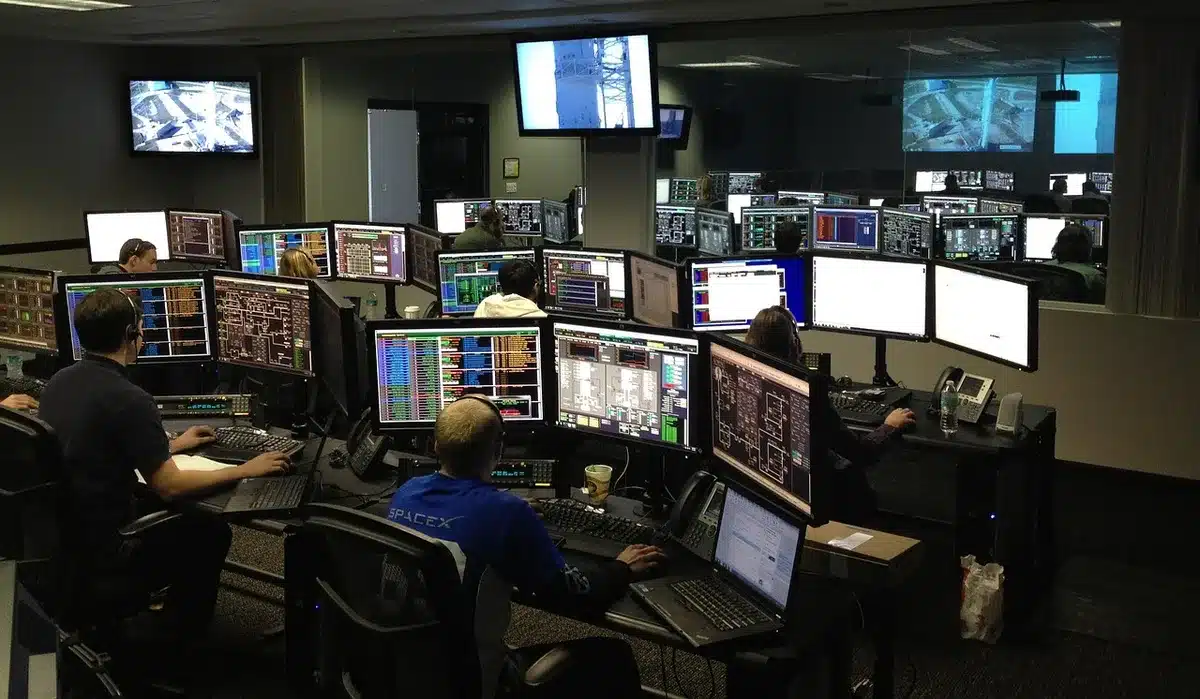
The tool gathers information from about 200 live data streams, including weather, flight paths, traffic flow and controller staffing, and produces routing and scheduling recommendations. FAA specialists review suggestions before passing them to the Air Traffic Control System Command Center in Warrenton, Virginia. Officials at local centers decide whether to accept or reject them.
SMART is advisory: it does not control aircraft or replace air traffic controllers. The report said investigators were examining the system’s data pipelines, but did not establish that those pipelines were involved in the outage. It also described a failure involving radio-frequency communications used by pilots and controllers, while noting that the official cause remained unknown.
Concerns raised before the deployment
In October, more than two dozen lawmakers wrote to Transportation Secretary Sean Duffy and FAA Administrator Bryan Bedford, relaying concerns from air traffic controllers about their role in SMART’s development and the training provided during deployment. The letter said controllers had apparently had little input and limited training, and raised concerns about possible interference with human decision-making or inaccurate system output.
The timing has also drawn attention from former Transportation Department Inspector General Mary Schiavo. Speaking on CNN, she said she did not know whether SMART and the ground stop were linked, while pointing to the closeness of the deployment and outage. Her comments reflect uncertainty, not a finding about the cause.
The FAA’s SMART rollout is part of a broader modernization effort. The report said Congress approved $12.5 billion for upgrades to air traffic infrastructure, and that Duffy has said a further $30 billion would be needed. Whether any part of that work contributed to the Nov. 13 disruption had not been established in the information reported.