
Show summary Hide summary
An adviser to the Court of Justice of the European Union recommended overturning a 2024 judgment that had scrapped a nearly €1.5 billion ($1.66 billion) antitrust fine against Google and parent company Alphabet, saying the lower court applied an excessively demanding test of how the company’s ad contracts affected rivals.
Advocate General Juliane Kokott told the court the General Court had required a contract-by-contract forensic review instead of assessing the commercial effect of Google’s AdSense for Search agreements collectively. Kokott recommended sending the case back to the General Court for further consideration, arguing regulators could weigh the agreements’ cumulative impact without dissecting every renewal or termination clause.
What the dispute is about
SpaceX catches Starship midair after it spent 22 hours in space, a spaceflight first
Major oil companies report billions in profits while U.S. drivers face higher pump costs
The European Commission had fined Google in March 2019 for using terms in AdSense for Search contracts that allegedly kept rival advertising services off publishers’ sites. Under AdSense for Search, Google placed ads alongside a website’s search results and split click-based revenue with the publisher. Earlier contracts barred competing services from certain sites; replacement terms introduced in March 2009 reserved prominent ad space for Google and required its approval for changes to how search ads — including rivals’ ads — were displayed.

Complaints to European regulators began in 2010 and were followed by submissions from companies including Microsoft and Expedia, the source reporting the case said. Google removed or amended the contested restrictions in September 2016. The General Court annulled the Commission’s decision in September 2024, and the Commission has asked the Court of Justice to overturn that annulment.
Kokott’s legal reasoning
Kokott said the General Court had faulted the Commission for aggregating successive contract periods without sufficiently examining whether publishers could switch suppliers between renewals or use termination rights. But she added that the existence of repeated renewals and unused exit rights could itself be relevant evidence of how the agreements operated in practice.
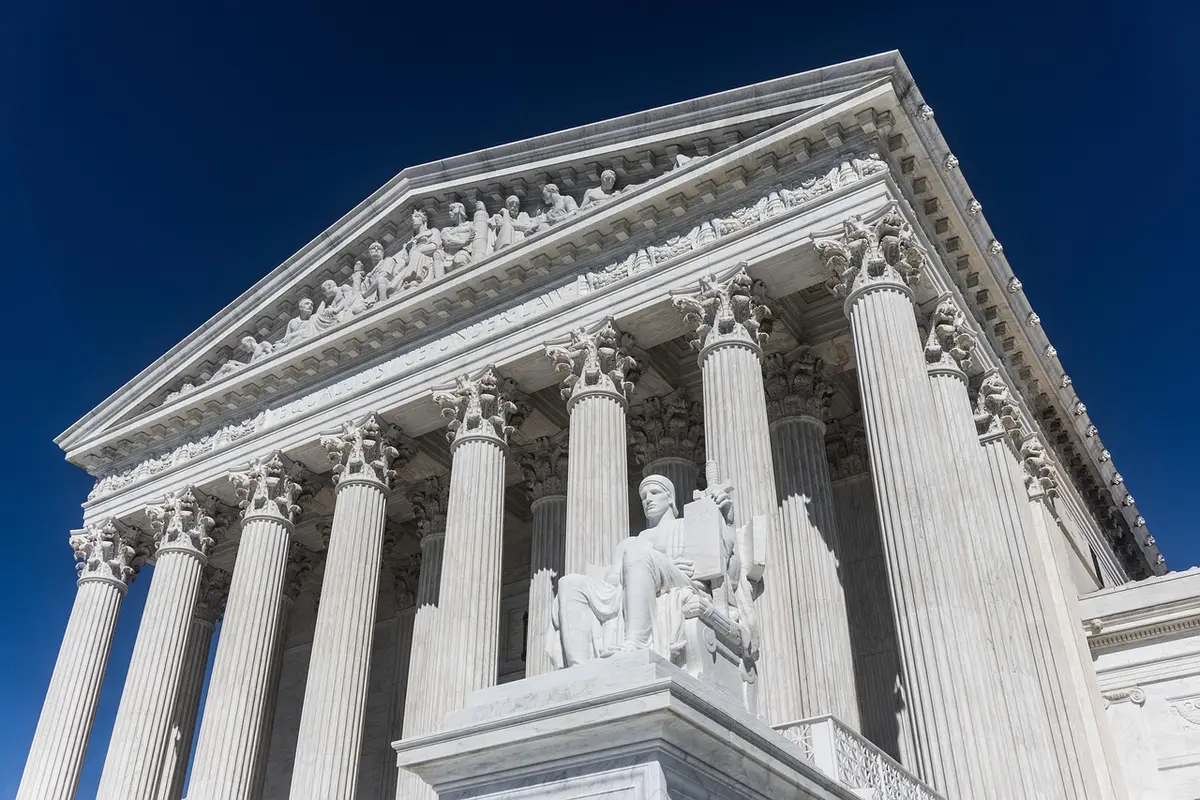
The lower tribunal had accepted evidence of Google’s market strength, the breadth of the restrictions and their deterrent effect on publishers considering rivals, Kokott noted, and she said the General Court did not show how closer scrutiny of contract duration would have altered those findings.
Kokott also posed a question about Google’s own rationale for the clauses: “In that respect, the question also raised by the commission in these proceedings does indeed arise: why was it actually necessary, from Google’s perspective, despite the allegedly superior quality of its offering, to introduce those clauses and to continue to apply them on a graduated basis for years?”
Reactions and possible next steps
Vuk Leković, founder of Leković Legal and a former case handler at the Serbian Competition Authority, called Kokott’s reasoning persuasive. He said regulators would still need to examine competitive effects but “For dominant companies, the lesson I would draw for clients is that short contract terms and termination rights are not a safe harbor if, in practice, customers keep renewing.” Leković cautioned that Google argues the Commission is seeking a fresh assessment of facts beyond an appeal court’s role and that a Commission victory would not automatically restore the original fine.
A Google spokesperson, quoted by Courthouse News, said the company was reviewing Kokott’s opinion and reiterated the General Court’s conclusion: “The General Court rightly annulled the original decision, finding that the EC had not demonstrated that our contracts restricted competition.” The European Commission declined to comment, according to the reporting.
Kokott’s opinion is nonbinding. If the Court of Justice follows it, the case would return to the General Court to resolve Google’s remaining challenges, including objections to the penalty. Kokott concluded that because the Commission did not appeal the rejection of its findings for 2016 — a decision that is now final — any restored fine would have to be reduced even if the Commission ultimately prevails on other points.
Courthouse News reporter Eunseo Hong filed the account on which this article is based.