Show summary Hide summary
As Americans head to the midterm ballots, a Fox News survey conducted Oct. 9–12 found that six in 10 voters say the cost of living is their top economic concern, highlighting affordability as a dominant issue shaping voter sentiment ahead of Election Day.
The survey also found broad pessimism about the economy: 74% of respondents gave the economic situation a negative rating, 53% said they expect the economy to worsen next year, and just 18% said their family is better off than two years ago, according to Fox News.
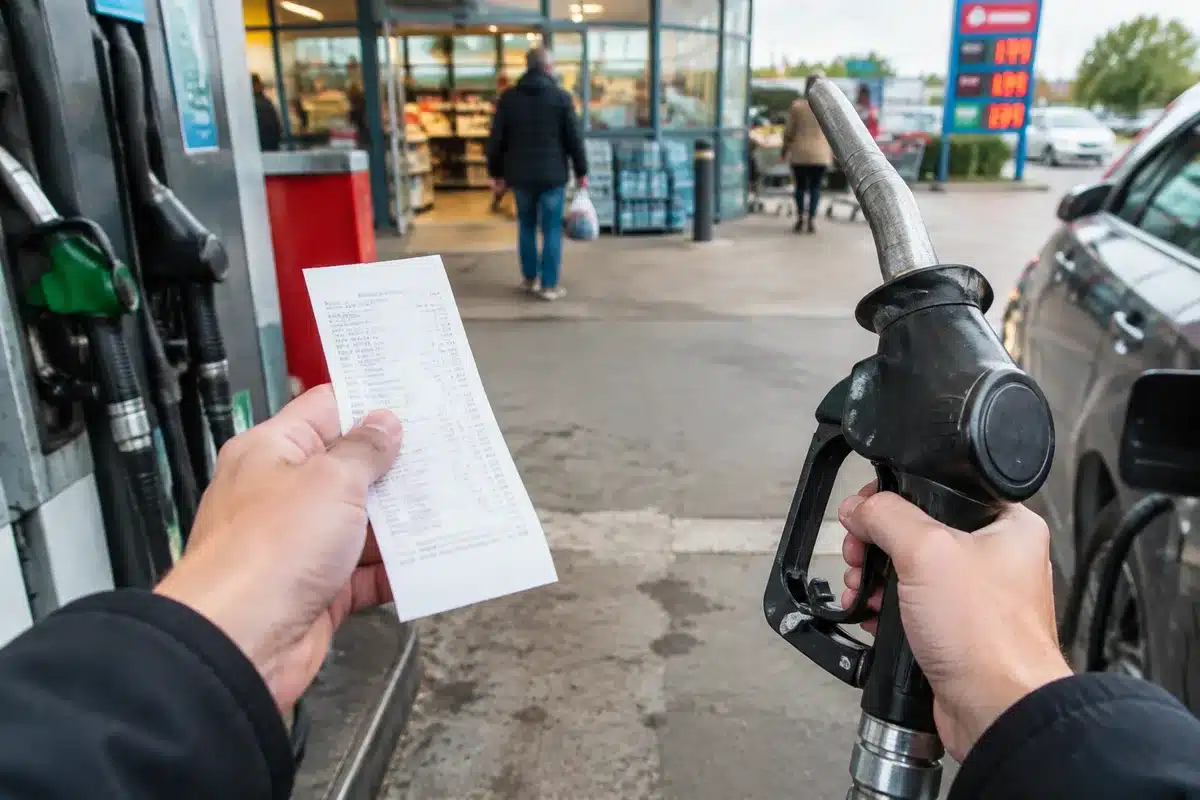
Inflation remains above the Federal Reserve’s 2% target. The most recent consumer price index (CPI) reading reported inflation at 3.7% year over year in September. That rise was driven in large part by energy: gasoline prices increased 9.1% on a monthly basis and were 34.2% higher than a year earlier, the Fox report said.
How gas and recent events are shaping perceptions
Ben Lieberman, a senior fellow at the Competitive Enterprise Institute, told FOX Business that gasoline prices have an outsized impact on how voters perceive affordability. “You can look at overall household budgets and motor fuels are only a part of that, but it’s the one thing that we know what we pay for down to the tenth of a penny, so it has an outsize influence on how people feel about the economy and whether things are affordable,” Lieberman said.

Lieberman linked higher pump prices in part to geopolitical developments, saying, “Had it not been for the Iran war, I think the perception would be a lot better because gasoline prices would be lower.” He also noted that although headline inflation has eased from a post‑pandemic peak of 9.1% in June 2022, prices have settled on a higher plateau than before that surge.
“One thing to keep in mind is the high inflation of years past. We don’t get a refund on that. Prices don’t go back to where they were, it’s like a new plateau. So there is the perception of high grocery prices, even though overall it may not be so bad,” Lieberman said, adding that households have adjusted by cutting back on discretionary spending such as vacations.
Political implications and policy pressures
Olivia Mitchell, an economics and public policy professor at the Wharton School of the University of Pennsylvania, told FOX Business that affordability is “one of the key topics of the midterm elections, creating a political challenge for Republicans who campaigned on bringing down prices and improving Americans’ well‑being.”
Mitchell pointed to renewed inflationary pressures after a period of decline — noting CPI was as low as 2.3% in 2025 and read 2.4% in January 2026 before rising to 3.7% — and said households continue to contend with high mortgage rates, auto loans, credit card balances and other consumer debt, which hinder rebuilding savings and retirement planning.
She also warned that trade measures are contributing to higher consumer costs: “The tariffs are definitely making much of what we consume much more expensive, and this is leading to consumer frustration, which is, in turn, I think, going to be reflected in the midterm elections,” Mitchell said.
Mitchell urged policymakers to move beyond general claims about economic growth and to present concrete plans showing how policies will improve day‑to‑day financial security for households. “Ultimately, the affordability debate will force policymakers to move beyond broad claims about economic growth and to demonstrate much more convincingly how their policies will improve the financial security in everyday lives of our households,” she said, as reported by FOX Business.