Latin America

El destino de las elecciones en Venezuela

maduro_capriles

Guest piece by Jerónimo Ríos Sierra

Los designios de las próximas elecciones en Venezuela que tendrán lugar el próximo 14 de abril, muy posiblemente, están predeterminados. Un auspicio donde, ni siquiera la confirmación de Henrique Capriles, nuevamente como candidato, es una variable a tener en cuenta.

En primer lugar, hay que considerar los datos que arrojan los trece años de Chávez en el gobierno. Tras su mandato, el umbral de pobreza pasó de afectar al 50% de la población venezolana al 27%, o lo que es igual, hubo una repercusión más que positiva sobre ocho millones de personas. Asimismo, la desigualdad se redujo en un 18%, haciendo de Venezuela uno de los países con menor inequidad social del continente. Igualmente, se consolidó un modelo de Estado donde los más desfavorecidos y las poblaciones más vulnerables del país fueron tenidos en cuenta gracias a la escolarización de más de dos millones de personas o al hecho, como reconocía la FAO en 2012, de que Venezuela haya sido “el país que más ha avanzado en el mundo en la erradicación del hambre”, al reducir en un 80% las muertes por desnutrición y garantizar, casi al 100% de la población el acceso a tres comidas diarias.

Un gobierno de tal dimensión popular tiene un calado de gran trascendencia dentro de buena parte de la ciudadanía, garantizando elevadas dosis de movilización electoral y relegando a un segundo plano muchas de las problemáticas que el gobierno de Chávez no ha resuelto, como la corrupción, la debilidad institucional del Estado de Derecho, la inseguridad o la más que deficitaria administración de justicia.

En segundo lugar, en buena parte de la memoria colectiva venezolana se interpreta la figura de Henrique Capriles como el gran derrotado en las elecciones presidenciales de octubre y posteriormente en los comicios regionales de diciembre – donde la oposición logró tres departamentos de los veintitrés que conforman el país. Si bien es cierto que Capriles supuso una oposición renovada y en ciertos aspectos atractiva, fue de más a menos y finalmente las expectativas que creó se vieron superadas por unos resultados electorales que confirieron a Chávez una victoria de más de diez puntos y el apoyo popular más elevado de su gobierno.

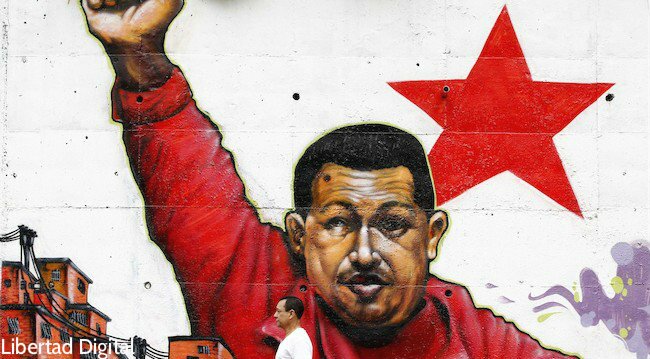
En una especie de adición entre el legado popular chavista y la proximidad de los últimos comicios hay que atender un tercer factor, quizá el más importante. Chávez aparecerá en la campaña como el mártir de la causa bolivariana. Aquél que se acordó de los excluidos en Venezuela; aquél que apostó por la solidaridad de los pueblos de América Latina; aquél que creyó firmemente en que una Venezuela “para los de abajo” era posible.

Sin duda, estas impresiones dominan en buena parte del imaginario venezolano invisibilizando las muchas sombras del chavismo sobre las que debe construirse la oposición, pero a las que también, en un ejercicio de responsabilidad política, deberá atender Maduro.

Éste debe evitar incurrir en errores para vencer con seguridad en los próximos comicios. Sin embargo, lo más importantes es que, continuando con la transformación social propia del modelo bolivariano, atienda las muchas cuestiones irresolutas que deja más de una década de gobierno del comandante. Lo más importante, en este punto de inflexión, es que sepa entender que su figura no es Chávez y que requiere de indefectibles dosis de redefinición en su liderazgo y en su gestión política si quiere hacer viable y sostenible un modelo de Estado erigido sobre fuertes problemáticas y una innegable polaridad social.

Jerónimo Ríos Sierra es analista político e investigador en ciencias políticas y sociología en la Universidad Complutense de Madrid

La huella de Chávez en América Latina

5be7d85d6f26325b05e44d32e13786d0

Guest piece by Miguel Benito.

Las fotos enormes de Hugo Chávez, Hassan Nasrallah (líder de Hezbolhá) y Malcoml X acompañaban la visita de Daniel Ortega a la universidad de Teherán en Junio de 2007. En diversas manifestaciones en Medio Oriente pudimos ver afiches con los rostros de Chávez, Nasrallah y Abdel Gammal Nasser. La figura del presidente venezolano constituida en el imaginario global como icono del antiimperialismo -o del sentimiento antiestadounidense-.

Las declaraciones del venezolano le convirtieron en la cabeza más visible –y vocinglera- de la crítica a la política estadounidense, justo cuando la imagen de la superpotencia se veía sometida a enorme desgaste por las decisiones de política exterior de la administración Bush. El venezolano, por medio de su retórica, logró construir una imagen de impenitente opositor “al imperio”, mientras PDVSA sostenía la economía venezolana –incluidos las conocidas misiones- exportando petróleo a los Estados Unidos, su principal cliente.

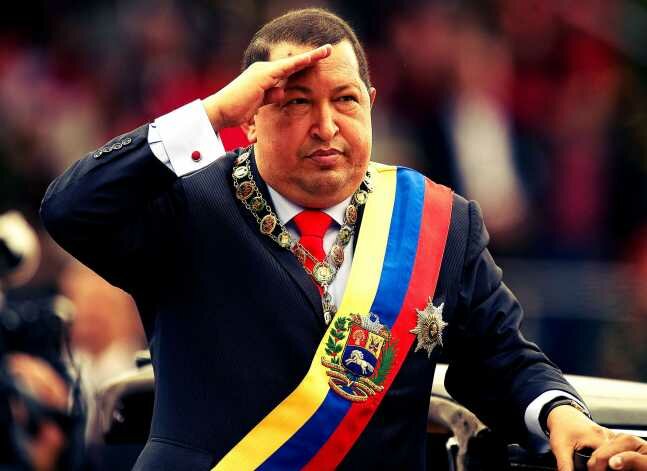
Pero el presidente de Venezuela es un maestro del discurso, un magnífico histrión, que ha comprendido la importancia de los símbolos y de las palabras en la política. De ahí sus esfuerzos por asimilar su propia imagen a las figuras de Bolívar y Cristo, y el empeño obsesivo por monopolizar la palabra en sus interminables discursos, que las televisiones venezolanas se veían obligadas a emitir. Sin derecho a replica, como saben muchos periodistas venezolanos. La reiteración ha conseguido que los mensajes de Chávez se instalen en el imaginario colectivo de los venezolanos. Y de muchos latinoamericanos.

Porque el mensaje del líder bolivariano resonó en la región. Ecos del pasado estaban latentes. Los recelos y frustraciones históricos de América Latina hacia su vecino del Norte seguían ahí, y el Consenso de Washington alimentó un renovado rechazo al intervencionismo –aunque fuese de nuevo cuño- estadounidense.

Y el antagonista, real o inventando, es el mejor estímulo hacia la cooperación y la solidaridad. En ese sentido, Estados Unidos, facilitó que Chávez denunciase el sistema interamericano, construido alrededor de la OEA. Los procesos de integración existentes para Chávez se mostraban ineficientes e insuficientes, al no responder a las necesidades y anhelos de los latinoamericanos y caribeños, porque estaban cooptados por los intereses de Washington. La única vía de construir una verdadera integración regional debía orientarse a consolidar la independencia y autonomía de los países de la región.

Así, en casi una década, se ha sucedido una acelerada, y a veces confusa, aparición de organismos, alianzas y estructuras para la integración y concertación regionales sin la presencia de Estados Unidos. La Alternativa Bolivariana para las Américas –ALBA- en 2004 y la oposición al ALCA –Acuerdo de Libre Comercio para las Américas- en 2005 fueron las primeras expresiones de este nuevo multilateralismo latinoamericano, que dividía el continente en dos, según la posición adoptada respecto al libre comercio y las relaciones económicas con Estados Unidos.

Pero si la economía era el motivo de división, la política, a pesar de grandes diferencias ideológicas en el continente, ha ofrecido la vía de acercamiento. La creación de organizaciones, como la Unión de Naciones Suramericanas (UNASUR, 2008) –con un papel brasileño protagónico- y la Comunidad de Estados Latinoamericanos y Caribeños (CELAC, 2011), han creado los espacios para reducir las controversias. Hoy UNASUR, con todas sus limitaciones, es el espacio de concertación político latinoamericano más dinámico.

No se puede negar que Hugo Chávez, con su retórica y su diplomacia petrolera, ha sido el actor fundamental en la recuperación y dinamización de proyectos latinoamericanistas, pero ¿logrará sobrevivir todo esa nueva arquitectura multilateral sin Chávez o la integración latinoamericana volverá a ser sueño y olvido?

This article also appeared in El Espectador.

Miguel M. Benito es Docente en la Universidad Externado de Colombia. Analista y Consultor político. @mbenlaz

Adios Hugo

Chavez2_fotoReferencial-647x471

Hugo Chavez has died.

Vice President Nicolás Maduro announced at around 4.30 this afternoon what the voices from inside Venezuela had told us hours before; Commander Hugo Rafael Chavez Frias, Venezuela´s President had left this earth.

Rest in peace Hugo.

There are those who will celebrate his passing. We will not.

Colombia Politics´editorial line has long argued against Chávez, and wished for his departure from the political stage. But no matter his  politics, no matter his crimes against democracy, and no matter how bizarrely incompetent his management of the economy, the death of a man aged 58 at the hands of a cruel disease is nothing to celebrate.

Chávez was a charismatic man, a leader who was loved and loathed, but never ignored. He changed Venezuela, not for the better in our view, but he changed it; for more than a decade he was one of Latin America´s most important leaders.

It would be churlish to argue that nothing Chávez did had any merit. It would be churlish too to ignore his popularity in certain sections of Venezuelan society. He won 8 million votes last year – sure not all of them were won openly and fairly, but win them he did.

In a funny way we will miss Chávez´s rhetoric. He had a way with words. What other leader could speak for hours and hours and hours without resting?

And it would be impossible not to mention Chávez´s role in the peace process with the FARC.

Yes, Chávez´s Venezuela played host to many of the FARC guerrillas, and the accusations of complicity of his government in acts of terrorism are well documented, but it is an undeniable truth that Chávez´s leadership was key to getting the rebels to the table in Havana.

None of this is to excuse Chávez´s politics nor the role he has played in supporting the FARC – but those who see him as a devil over simplify. Please read any of our other articles on Chávez to understand the strong line we have taken against his government. But today is not a time for political points scoring.

He has left us and thoughts now turn to the future. Elections must be called for 30 days´time.

Who will represent Chavismo? Nicolás Maduro the Vice President had Chávez´s blessing, but Diosdado Cabello has the military on his side.

And what of the opposition? Capriles should emerge as the candidate, but their strategy is not certain and they appear ill prepared for the battle ahead.

Colombia Politics´sources tell us that tanks have taken to the streets in Venezuela´s cities over the last few days. We hope the transition is peaceful, despite the odds.

Adios Hugo.

Another Obama speech that didn’t mention Latin America

president-barack-obama-speaks-at-an-interfaith-vigil-for-the-shooting-victims-from-sandy-hook

A guest piece by Silvio Canto JR.

It is getting harder and harder to take President Obama seriously.  Can someone explain to me how last week’s “campaign speech” contributed to fixing our problems, or even understand them?

I agree with The Dallas Morning News: President offers programs but no debt solution 

He wants Congress to vote but forgets to tell us that the Senate Democrats have not passed a budget or even brought any of the Obama proposals to a vote. Does anybody remember the last time that the Senate Democrats put a serious issue to a vote?

Am I the only one who feels insulted by this man’s total lack of seriousness or disregard for reality?

Tuesday night, President Obama continued his disregard for Latin America. I guess that President Obama must think that Latinos just spend the whole day thinking about “immigration reform” or anticipating “5 de Mayo” speeches.

Down under, and I mean south of Texas, we see violence exploding in Central America. The cartels are getting crushed in Mexico so they are finding fertile terrain in little countries like Guatemala and Honduras.

We spoke yesterday on my show with Ray Walser of The Heritage Foundation & Juan Gutierrez, a businessman who ran for president of Guatemala. They are both alarmed by what is happening in the region.

Even more dangerous, we see growing signs of Iran’s influence in Latin America.

Benny Avni reminds us of the Caracas-Tehran romance that will not promote US interests in the region:

“Western intelligence agencies have been watching Venezuela’s dealings with Iran with increasing alarm. Iran and its allies (including Syrian President Bashar Assad) get gasoline from Venezuela, which in return buys Iranian know-how – perhaps in housing, but surely in arms and other sinister stuff.
Trade between Iran and Latin America rose to $3.6 billion in 2011. With the exception of Brazil, the largest trading partners (Argentina, Ecuador, Bolivia and Venezuela) were largely motivated by anti-Americanism.” (Avni)

This is happening 3 hours south of Miami!

President Obama’s indifference has divided Latin America into two blocs: The leftists who love preaching socialism and doing business with Iran; and the success stories, like Colombia, Peru, Chile & Mexico, who must be wondering if President Obama understands what is happening south of the border.

Frankly, it’s frightening to watch how President Obama has mastered the art of pandering, from calls for minimum wage & telling “hispanos” what they want to hear.

At the same time, it is even more frightening to see how Latin America is getting away from us because we have a leader who does not understand that “leadership” is also part of the job description.

Silvio Canto JR is author of the book, Cubanos in Wisconson, runs the US/Latin American talk radio show and writes here 

Rafael Correa: muchas más luces que sombras

President Rafael Correa

A guest piece by Jerónimo Ríos Sierra

El éxito del resultado electoral de Rafael Correa, con casi un 60% de respaldo electoral no hace sino suponer un paso adelante en el proceso de transformación del Estado ecuatoriano y la “revolución ciudadana” iniciada en 2007.

Desde ayer, Correa tiene cuatro años por delante para profundizar las líneas de un gobierno que ha conseguido hacer crecer su economía a un ritmo medio del 5%, a la vez que ha reducido un 27% la pobreza del país. Todo, desde una profunda transformación social que imbrica interculturalidad con inclusión política, económica y laboral.

Así, las cifras hablan por sí solas. Durante el gobierno de Correa, se ha conseguido reducir la pobreza en un 40% dentro del seno de las poblaciones vulnerables indígenas y afrodescendientes. Asimismo, el desempleo se ha reducido notablemente, pasando de casi un 9% en 2006 hasta presentar en la actualidad, según la Organización Internacional del Trabajo, registros próximos al pleno empleo (5%). De igual forma, la desigualdad, expresada en el índice de Gini, por ejemplo, se redujo de un coeficiente de 0.54 en 2006 a 0.46 en 2012.

En su proyección exterior, en el gobierno de Correa se observa un claro posicionamiento crítico con el sistema internacional actual, y dentro del cual cabe alinear a buena parte del continente latinoamericano. Así, por un lado, aboga por romper con las instituciones herederas de Bretton Woods – Fondo Monetario Internacional y Banco Mundial- que tan dañinas han sido a través del Consenso de Washington para los intereses de América Latina. Por otro lado, apuesta por consolidar y profundizar los escenarios de interlocución propios del continente, como Unasur o Celac; todo ello, desde un protagonismo político creciente y una perfecta relación diplomática con los gobiernos de diferente signo ideológico de la región.

Sin embargo, pese a lo señalado, quedan muchos retos por abordar. Así, es necesario profundizar la transformación social del Estado, y reducir los niveles de inseguridad y corrupción que, no obstante, son una constante en el continente latinoamericano y no deben constreñirse en exclusividad como responsabilidad del mandato de Correa.

Quizá, el más importante de tales desafíos pasa por superar la mayor contradicción discursiva del dirigente ecuatoriano, y que tiene que ver con la consolidación de un modelo económico de megaminería desarrollista y dependiente del petróleo.

Es decir, la narrativa de un marcado discurso anti-neoliberal no se corresponde con la práctica, habida cuenta de la persistencia de un modelo primario, extractivo y exportador que se torna como la principal amenaza ambiental, social y cultural del país, y que ya le ha supuesto una crisis importante en su gabinete de gobierno. Es por ello que resulta necesaria al respecto la exploración de fórmulas alternativas de desarrollo que, verdaderamente, armonicen práctica y retórica.

Sea como fuere, el resultado de todo es que el mandato de Correa al frente de Ecuador, en estos años, arroja muchas más luces que sombras. Luces que no son más que el resultado de una izquierda que en América Latina, en general, presenta una fuerza discursiva y transformadora que dista mucho de la acontecida en Europa, decrépita, carente de discurso y convicción y sin capacidad alguna ni atisbo, hasta el momento, de reconversión.

Jerónimo Ríos Sierra es Analista Político e Investigador en Ciencias Políticas y Sociología de la Universidad Complutense de Madrid.

This article appeared first in El Espectador

Pacific Alliance integration presses ahead

alianza-del-pacifico

Colombian President Juan Manual Santos met with fellow leaders from member states of the Pacific Alliance, the latest addition to the plethora of intergovernmental organisations in Latin America, during the CELAC conference in Santiago on Monday.

The aim of the meeting was to “take stock” of the decisions taken last year, but the leaders laid out their ambitious plans for the bloc. Following on from the announcement made late last year that 90% of tariffs on trade between the member states are to be abolished in the first quarter of this year, a deadline of March 31 was set for the negotiation of the remaining 10%.

Moreover, working groups have been set up to facilitate the deepening of integration in other areas including the free movement of labour and capital. Visa free travel among citizens was achieved at the back end of last year, and free movement of capital is currently possible in three of the four member states through the Mercado Integrado Latinamamerico. The MILA integrates the stock exchanges of Colombia, Peru and Chile, and the next step will integrate Mexico creating an equity market greater in size than Brazil.

The Pacific Alliance was set up in April 2011 between the four of the most open economies of Latin America, with a key aim of the organisation to enhance trade links with the ever-thriving markets in the Asia Pacific region. With a combined population of 215 million people, the GDPs of the countries together would rank as the ninth largest in the world.

In a further interesting development, the Spanish Prime Minister Mariano Rajoy expressed a desire for Spain to take an active role in the organisation beyond its current status as observer nation. The future of this organisation provides an interesting dynamic to South American international relations indeed, and the speed with which this integration has been achieved reflects the similar economic leanings of the member states that make up the organisation.

Dictators and despots “promote democracy” at CELAC summit

Maduro-Celac-mensaje-propuestas-Chavez_EDIIMA20130126_0202_4

Cuban dictator Raul Castro was yesterday handed the presidency of the Washington loathing Latin American and Caribbean geo-political block CELAC, armed with the mission of promoting democracy in the region.

CELAC was set up in 2010 to spite the US and Canada and the Oganization of American States (OAS) which many left-leaning Latin American governments view as being in the pocket of the North Americans.

The brain-child of Venezuela´s favourite absent president, Hugo Chávez, CELAC joins a long list of inter-governmental bodies that have sprung up in recent years in the bureaucracy-obsessed continent.

Ten years ago, Chávez set up ALBA as a socialist vanguard to stand strong against the evil imperialist might of the US, funding the organization with the petrol money he perhaps would be better advised to have invested in his own country´s development.

But the ever imperious Chávez outgrew ALBA, feeling that Ecuador, Nicaragua and Bolivia did not represent a particularly significant geo-political force – at least not big enough for his own head.

Only by uniting the continent in his image, would Chávez – like Bolivar before him had wished to do – be able to claim he had secured the freedom of the Spanish-speaking Americas, that he had heroically shifted off the shackles of the oppressive Washington.

Following last year´s Caracas-based love-in to inaugurate this venerable body, the presidents, dictators and despots of this bizarre grouping have descended on Chile this week to pontificate, sabre-rattle and to enjoy the trappings of the lavish, all-expenses paid for, trip to one of the America´s most economically successful countries.

As hosts, Chile shared the table with the founding fathers, Venezuela – in the form of the caretaker leader Nicolás Maduro – who read out a heart-warming, call-to-arms letter, supposedly written by Hugo Chávez (who despite being able to write, talk and joke as Maduro claims, is incapable of a reassuring telephone call to his beloved compatriots).

The proceedings began with some gut-wrenchingly obsequious paeans to the wonder of the Cuban dictatorship, before the big news was revealed – Cuba, and its dynastic despots the brothers Castro were to be handed the honour and the glory of the CELAC presidency.

What else happened yesterday? Argentine President Fernandez de Kirchner accused the British of trying to control Antarctica through the Falklands, and Evo Morales, President of Bolivia called on his “brothers” (yes, brothers), of the FARC to lay down their arms.

In CELAC´s statues is the commitment to promote democracy. How apt then that a dictator has been sworn in as president of this unelected unaccountable body – democracy? Give me a break.

So while Latin America´s magical realism appears to know no bounds, Colombia Politics asks, where on earth is the continent´s George Orwell to attack this grotesque nonsense?

Venezuela, a very relaxed coup d´état

chavez-mural-suple_zpsb865f7de

For the first time in history an abstract noun was sworn in today as president of Venezuela. Hugo Chávez, incapacitated through illness was absent from his possession, leaving Caracas to celebrate the start of a new presidential period of “Chavismo”.

Thousands lined the streets of the capital to “support the decision of the supreme court”, as Nicolás Maduro, the-Chávez-annointed new leader of the revolution, had warned the nation it must.

Maduro was referring to the ruling from the court that permitted the start of a new period of government even without the availability of the president to take the reigns of power. It concluded that the continuity of Chavismo – the fact that it was a re-election, not the start of a new regime – obviated the need to insist on the president´s physical presence.

We were told effectively that it was not Chávez that was elected in November, but rather Chavismo, the concept.

Of course this is total rot. The Venezuelan constitution was violated today.

So, let us be clear this is a form of coup d´état, or a “coup de constitution”. Sure, Chávez was elected in November, but amid a silence on his health it is constitutionally, morally, politically, and democratically untenable simply to pretend business is as usual.

The interim measure of swearing-in an empty chair smacks of the influence of the brothers Castro of Cuba, where Chávez is being looked after, and where Maduro has spent much of the last few weeks cooking up this plan.

None of this is at all surprising if you consider the supreme court is unmistakably Chavista – as are the vast majority of the country´s institutions.

As El País commented:

“Chavismo recently cleaned out its opponents in the court, and controls all the apparatus of power. Through the use of petrol money, Chavismo dominates the state, the armed forces, the supreme court. It is this state that is hiding the physical state of the president.”

El País could easily have mentioned the electoral commission, the media…the reach of the (until December) omnipresent Chavez is bizarrely similar to the dictators of the far East.

Still, if some news reports are to be believed the people of Venezuela are happy enough. Of course, many of them are not, but is certainly the case that Chávez enjoys a level of support that borders on religious fervor.

Of course many were paid to be there today, directly or indirectly. Many have government jobs because of him, many have received electoral bribes…But it is also the case that for many, such is the all pervasiveness of their “comandante” that life without him is difficult to imagine.

…As the kidnapped sometimes fall in love with their captors…as the abused finds it impossible to leave the abuser…Phsycologically the human is a complicated being.

There are many complex reasons why many Venezuelans turn out to support their ailing leader. The cocktail of emotions is fear of the unknown, sadness for Chávez´s personal battle with terminal cancer, a genuine belief in his politics…

There are too few reports that try to analyze this. There are too many analysts who conclude too easily that the support for Chávez is either a sign of democracy or on the other side a total fabrication – that Chávez´s popular appeal is pure propaganda.

There is frankly more to it than that. How else is it possible to explain the relaxed nature in which the coup d´état was carried out today?