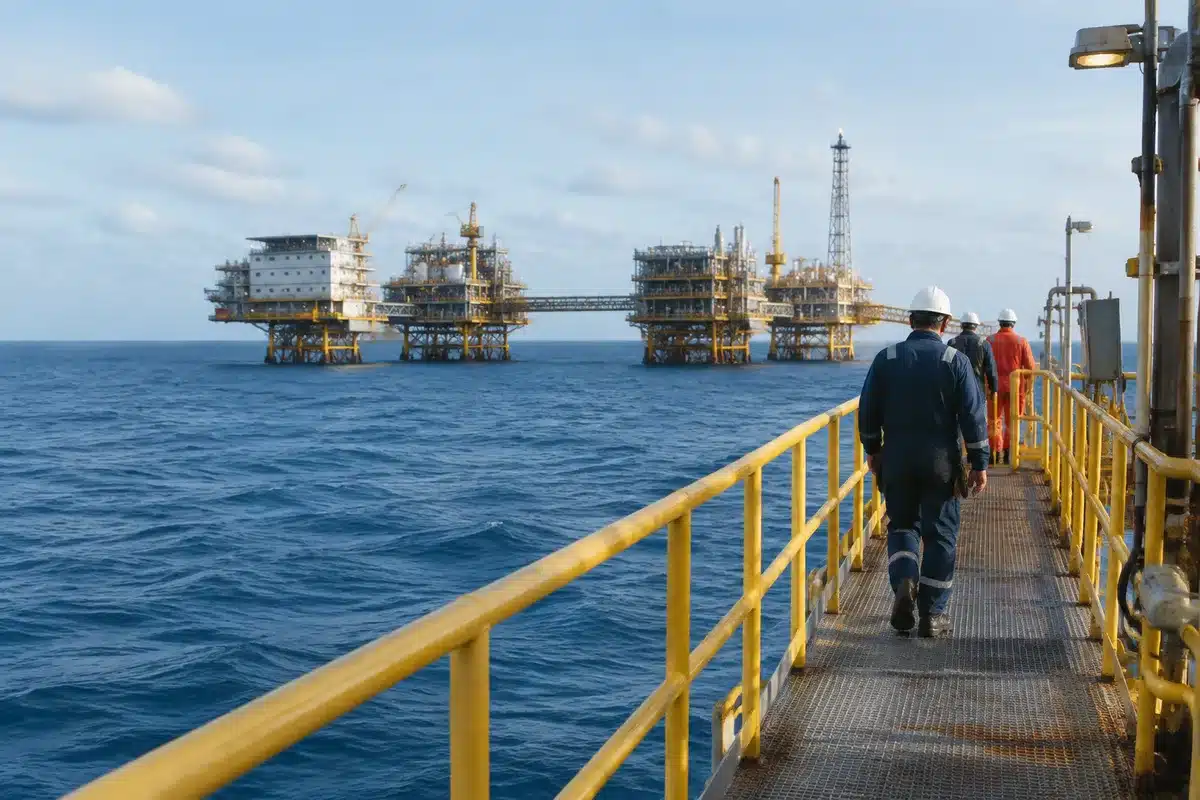
Palmer Luckey, the cofounder of defense-technology firm Anduril, outlined plans for a massive offshore seastead called “SLAB” in a post on X (formerly Twitter) on Nov. 18, 2026, saying the platform would host critical industries outside state and local laws. Luckey described the project as intended to be cheaper than land and to offer relief from what he called rules that “cripple critical American industries.”
In his X post, Luckey wrote that selling Oculus to Facebook in 2014 financed both helicopter flight lessons and development of the SLAB concept, which he said has a “1,000 year design life.” He added that the project’s goal was to be “cheaper than land and absent state/local laws that cripple critical American industries like metal processing,” and that such a facility would “make America stronger” and act as a “relief valve for ill-considered or outdated rules and regulations.” The post included an image, which Luckey said appeared to be AI-generated, showing a vast concrete platform rising above the ocean with factories and offices on top.

Luckey said he was revealing the plan after media coverage began describing the effort as a floating AI data-center project. He also said the SLAB effort would be funded in part by proceeds from the Oculus sale—Facebook bought Oculus for $2 billion—and that unnamed “close friends” had invested in the venture at a $1 billion valuation, according to his post.
Palmer Luckey proposes offshore U.S. industries to avoid laws he calls ill-considered
Shapiro says Biden did not do enough to restrain Netanyahu
Anduril, the defense company Luckey founded, sells software, drones and high-tech military equipment and has secured contracts with multiple U.S. military branches and allied governments. The company was valued at about $61 billion during a $5 billion funding round in May, the supplied reporting notes. A seastead would join other business ventures Luckey has announced, including a retro-gaming hardware firm called ModRetro, a digital bank named Erebor, and a dog-breeding and cloning venture called Warhound.
Luckey is not the first wealthy backer to consider seasteading. The Seasteading Institute, which promotes ocean-based autonomous communities, received a $1.7 million investment from venture capitalist Peter Thiel in 2008, according to the institute’s website. Thiel later left the board roughly a decade afterward and concluded the plan was not feasible, the same source says.
The outline Luckey provided did not specify which state or local laws he intends SLAB to avoid, nor did his post address legal, regulatory or maritime hurdles such projects typically face. Observers of past seasteading efforts have noted significant practical and legal barriers; Luckey’s post framed SLAB as a response to those barriers rather than a detailed blueprint for overcoming them.
Luckey’s announcement arrived as a mix of technical ambition and political argument: he positioned SLAB as both an engineering project with a long design life and a means to shield certain industries from regulations he views as harmful. The specifics of financing, permitting, location, environmental review and applicable international or U.S. maritime law were not laid out in his post.