Author: Martin Higgins

Santos announces stimulus package

Plan Impulso Productividad 02

In what might be judged as a cynical vote-winning exercise, President Santos unveiled his PIPE – Promotion Plan for Productivity and Employment – on Monday.

The PIPE is an economic stimulus package which he hopes will help revitalise some of the ailing areas of Colombia’s economy. In particular, Santos hopes it will breathe some life into Colombia’s industrial sector which is failing to keep pace with overall growth patterns. The President attributed the difficulties this area of the economy, which includes oil refining, acrylic, paper and cement production, down to the strength of the Colombian peso, and the break this has on exports. The agricultural sector too was marked as stuttering.

Santos´PIPE package is also a pitch to the middle classes, with the government proposing a subsidy on the interest on mortgages for houses costing between US$43500 and USS108000 (similar to that seen in the UK Government´s budget a few weeks ago). The government believes this will benefit around 35,000 initially, as well as boosting the housing market.

The measures reflect a growing concern in the Santos administration that in spite of the relatively healthy GDP growth figures in recent years, the Colombian economy is still underachieving – and that the trends in certain sectors are towards downward revisions. Perhaps more salient though is the fact that the coming year will see a hotly contested presidential election.

These measures are difficult to separate from the short term electoral interests of the government. Particularly so given the areas at which the stimulus package is aimed – crucial groups of voters.

Supporting the industrial and agricultural sectors as well as assisting people to buy their own homes will give the Santos campaign some concrete successes that it can pitch to voters in the coming year when the question will be “what have you done for Colombia during your four years as President?”

The campaign is well and truly under way.

FARC links with Al-Qaeda?

e6e926eb-350a-43e5-887a-553ffdab8fbc_zps165f515f

Evidence has emerged of a link between the FARC and Islamist terrorist groups in the North African Maghreb after two Colombian nationals were arrested in Algeria last month by the US Drug Enforcement Administration (DEA) and Spanish intelligence services.

Spanish radio station Cadena Ser reported the news this week claiming that the arrests relate to events that took place in the autumn of last year whereby the Colombian nationals – one of whom is a member of the FARC – traded cocaine for arms with Islamists in North Africa.

It is alleged that the Islamists – three of whom are being held by the Algerian army – belonged to Salafi groups operating under the Al-Qaeda in the Islamic Maghreb (AQIM) umbrella and obtained the weapons during the turmoil in Libya after the deposing of Colonel Gaddafi. Details of the weapons obtained are not known.

In a further similar development, the DEA reported last week that two more Colombians were arrested – this time within Colombia – for conspiring to trade cocaine for arms in the West-African country of Guinea-Bissau.

In recent years West and North Africa has become a key drug trafficking route between the cocaine producing countries in Latin America and consumers in Europe, and Islamist groups operating in the region have been linked to the trade. The FARC have long used the cocaine trade as a key source of income, and these arrests suggest that their activities go far beyond the Colombian borders by linking up directly with terrorist groups abroad.

Colombian business leader calls for end to presidential feud

santospastrauribe

The president of Colombia’s largest employer organisation, ANDI, called for Colombia’s politicians to “end confrontations and differences” during a conference on improving Colombia’s competiveness.

Luis Carlos Villegas expressed concerns that the on-going political confrontation between President Santos and former presidents Pastrana and Uribe had a negative effect on the Colombian economy and played into the hands of extremists.

He called for unity amongst political leaders, stating that “division benefits organized crime and…creates opportunities for terrorism and a fall in security”.

Villegas fears that confrontation between political leaders could have a negative effect and will play into the hands of extremists is evidence of the bizarre immaturity of Colombia’s democracy – a theme central to Colombia Politics´ analysis.

Put frankly, confrontation between political figures and the challenging of policy is at the heart of any healthy democracy and needn’t play into the hands of extremist groups. What´s more, the lack of credible an organised opposition to the government within the Colombian Congress is a weakness, not a strength, of the Colombian political system.

A challenging year ahead

Turning to economic matters, Villegas spoke of a challenging year ahead for the Colombian economy, stating that though domestic demand has been weakened and the world economy is unstable, “this does not mean we have to resign ourselves to another bad year industry.”

Villegas claimed that the Colombian government must focus on improving its competiveness in order to offset the effect of challenging global economic conditions. Colombia’s economic competitiveness – though improving – lags behind a number of countries in the region. According to a report last year by the Consejo Privado de Competitividad, Colombia has ”fallen short in actions required to improve the competitiveness of the economy” and that as a result “remained stagnant in international indexes such as that of the World Economic Forum”.

Villegas highlighted lowering energy costs, fostering investment in modernising plants and machinery, as well as a monetary policy that is conducive to investment and growth as areas that the Colombian government should address.

Colombian Finance Minister Mauricio Cardenas welcomed the proposals and what he called the “critical input”, adding that “the government is preparing an emergency plan to boost especially two sectors: industry and agriculture”.

Colombia´s outlook positive despite January trade deficit

colombian_offer_grand

For the first time in three years Colombia’s balance of trade figures for January saw a deficit with export figures of US$4.948 billion outweighing imports of US$4.735 billion, according to Colombia’s national statistics agency DANE.

For an export-led economy such as Colombia’s such figures could be cause for concern. However, looking at the overall numbers for the past 12 months, a healthier picture emerges with Colombia’s exports remaining strong.

Indeed, a balance of trade surplus in 2012 of US$5 billion and exports of $60 billion – a figure almost double that of three years ago – demonstrate continued growth of Colombia’s export industries. Traditional export industries that have contributed to this growth include petroleum, which rose $3.2bn in 2012, and ferronickel, up US$58m in 2012.

Perhaps unsurprisingly in light of the recent strikes, Colombia’s coffee industry saw a decline in 2012 against a background of plummeting global prices in the commodity in recent times.  Disconcertingly though, figures from DANE released recently showed that in spite its status as the fourth largest coffee producer in the world, 80% of the coffee consumed in Colombia is in fact imported – mostly from Ecuador and Peru.

As such, the decline in exports is unlikely to be offset by the domestic market, heaping more misery onto coffee farmers who already find it virtually impossible to make a decent living growing the product.

The coffee industry aside though, should the trends seen in 2012 continue this year then Colombia can look forward to another year of healthy economic growth.

Two held over Galan assassination

web_luis_big_ce

Colombia´s Attorney General’s office has detained two important figures in relation to the murder in 1989 of Liberal Party presidential candidate, Luis Carlos Galan.

Manuel Antonio Gonzalez, former head of protection at now-defunct Colombian security service, DAS, and Luis Felipe Montilla Barbosa, the former chief of police in Soacha, will both face prosecution for the crime of conspiracy to aggravated murder for failing in their duty to protect the presidential candidate.

Galan’s assassination in 1989 took place during the height of “narco-terrorism” in Colombia when the Medellin drug cartel declared war on the Colombian government in response to its initiatives to extradite leading drug criminals to the United States. Galan, who was campaigning vigorously in favour of extradition, was gunned down in front of a crowd of 10,000 people in Soacha on the outskirts of Bogota along with two of his bodyguards under the orders of key members of the Medellin cartel, including Pablo Escobar.

The charges being brought against the two alleges that their actions in the run up to the killing suggest involvement in the conspiracy. For Gonzalez, the case alleges that his decision to place the inexperienced Jacobo Torregrosa in charge of Galan’s security was a “political act” designed to compromise his safety.

Montilla, it is alleged, was responsible for the lack of bodyguard protection of Galan on the day of the murder, ordering a number of officers that could have been used to protect Galan on another mission that never materialised.

Responding through his Twitter account on Sunday evening the son of the murdered presidential candidate and recently resigned corruption tzar, Carlos Galan, said: “I’ve always trusted that justice will be done”.

Medellin “most innovative city in the world”

medellin_grand

Only twenty years ago its name was synonymous worldwide with drug cartels, violence and Pablo Escobar. Yesterday though, the transformation that Colombia’s second city Medellin has undergone in the past twenty years was unmistakable as it was named “Innovative City of the Year” by the Urban Land Institute, who carried out the contest in conjunction with the Wall Street Journal Magazine and the Citigroup bank.

Medellin beat off the competition from 200 cities worldwide that were originally shortlisted by the ULI, eventually being whittled down to a final three where it faced Tel Aviv and New York, with members of the public worldwide being able to vote on the winner.

The WSJ Magazine claimed Medellin’s “progress and potential” distinguished it for the award. It said it has “found new solutions to classic problems of mobility and environmental sustainability” with its gondolas, giant escalator and modern underground metro system, and that “glistening new museums, cultural centres, libraries and schools enrich the community”.

Unlike the District Capital, Medellin is a shining example of how good planning and sensible leadership from city hall can benefit a city, and its transport systems and housing programmes make it a desirable place to live for its citizens. What is more, the city has earned the reputation as the “Silicon Valley” of Latin America through its high concentration of high-tech industries.

Asked by WSJ Magazine what he felt made Medellin deserving of the award, mayor Anibal Gaviria said that “innovations in urban development, but also innovations of social programmes with a high content of equity and social justice.” He added: “The people of Medellin…love our city very much. They are proud of our city.”

Land reform a sore issue in peace talks

farc

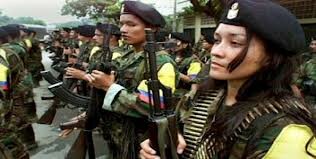
Verbal shots were fired between the Colombian Government and the FARC over the key issue of land reform during the peace talks in the past week.

The exchange began with President Santos stating he is “confiscating the FARC of their ill-gotten land”, which amount to 500,000 hectares in the south of the country, and that he will return the land to the peasants who “deserved” it. He branded former FARC leader Mono Jojoy – now deceased – as “one of the great landowners” who had “stripped the state”.

FARC leader Ivan Marquez said he hoped the government would not “kick the table” and attributed Santos’ recent statement as driven by “electoral whims” and his desire to rebound in the polls.

Indeed, the President’s ratings have taken a hit in the past month, where a Gallup Colombia poll found 47% of its respondents viewing the President unfavourably, up from a 39% in December. What is more, another poll by the same organisation found that fewer people support the peace talks continuing until a resolution is met  than did two months ago, with more now supporting the idea of defeating the guerrillas “militarily”.

It suggests that the Colombian people are growing impatient with the progress of the talks, the details of which have seldom been made public but for a few ad hoc press briefings by either side, and the President himself is taking the hit for this through a fall in support.

The FARC of course has no such worries of democratic accountability, and they sidestepped responding directly to the accusations made by Santos. In recent days they have submitted over 40 proposals which they believe will “streamline” the talks.

Key among these is the creation of a commission to investigate and verify the countless number of reports and testimonies of land dispossession during the armed conflict, which they attribute to “corporations, large landowners, government officials and businessman”.

The talks are set to take a recess at the end of the week.

Finance Minister Cardenas: Colombian oil running out

Colombia OIL RISING STAR

Colombia’s oil supplies will last only eight more years unless new sources are found, according to Colombian Finance Minister Mauricio Cardenas. In an interview with RCN Radio, he said though the majority state-owned company Ecopetrol saw healthy profits last year, it was imperative that they explore for more oil and increase reserves.

Oil represents up to a quarter of all Colombian exports, making the future of its production critical to the successful growth of the Colombian economy.

Cardenas added that attacks on oil infrastructure by various groups, including the FARC, had damaged oil production in the past year. However, he said that the actions of the military have led to an improved security situation: “Since September things have been much better, which has allowed production to rise above one million barrels a day.”

Security is a sensitive issue for the industry with the majority of Colombia’s oil fields found in some of the country´s most unstable regions where the FARC have a significant presence. The outcome of the Havana peace talks will have a marked effect on production.

According to the US Energy Information Administration, oil provides around 40% per cent of Colombia’s energy, with Colombia consuming 200,000 barrels of oil per day and rising. Around half of the oil the country produces is exported, with the majority going to the United States.

Cardenas´warning is not only for the industry, it is a confession that in the long term Colombia must evenutally rely less  on oil as a major engine of the economy, both as an export and a source of energy.

Though not as reliant on the commodity as its neighbours, Venezuela and Ecuador, the insecure position of relying on finite – and environmentally damaging – resources means that the future for Colombia is to explore new forms of energy and to continue to diversify its economy.