Show summary Hide summary
Irish Prime Minister Micheál Martin told FOX Business that U.S. President Donald Trump’s drive to bring multinational investment back to America has made Ireland “more competitive” rather than sidelining the country, and that officials from both governments are now working through details after Trump publicly pledged to lift tariffs on Irish whiskey.
In an interview with FOX Business, Martin described Trump as a “tough” negotiator and said the president had used “some choice language” in their recent talks, but added that Trump’s emphasis on encouraging companies to invest in the United States is already producing results.
“He’s certainly had success,” Martin said. “He’s having success in terms of the investments that those companies are now making in the U.S. You can see that.” He said Ireland has taken that development as a prompt to “double down” on making itself “fitter and more nimble and agile” to maintain inward investment.
Trump says super PAC will assume funding for controversial ads paid with public money
New SNAP rules take effect October 2026, affecting immigrant households across four states
Why companies still pick Ireland
Martin argued Ireland’s attractiveness to multinational firms goes beyond corporate tax policy. He highlighted strengths in pharmaceuticals, medical devices and technology, a highly educated workforce and a pro-enterprise approach to doing business. “We’re less bureaucratic, and the mindset in Ireland is, if a company comes into Ireland, our view is, ‘How do we make it happen? If you have problems or challenges, how do we solve them?'” he told FOX Business.

Martin also noted government agencies such as IDA Ireland and Enterprise Ireland play a role in both attracting overseas companies and helping Irish companies expand overseas. He said Irish firms already employ about 200,000 people in the United States and that investment increasingly flows both ways: “People in the health sector are telling me that the number of Irish companies coming in here with great ideas and expanding into the U.S. market and creating jobs here is growing all the time.”
According to the Irish government, nearly 800 Irish-owned companies employ more than 200,000 Americans, Irish investment in the U.S. exceeds $390 billion, and Ireland is the fifth-largest source of foreign direct investment into the United States.
Whiskey pledge and follow-up talks
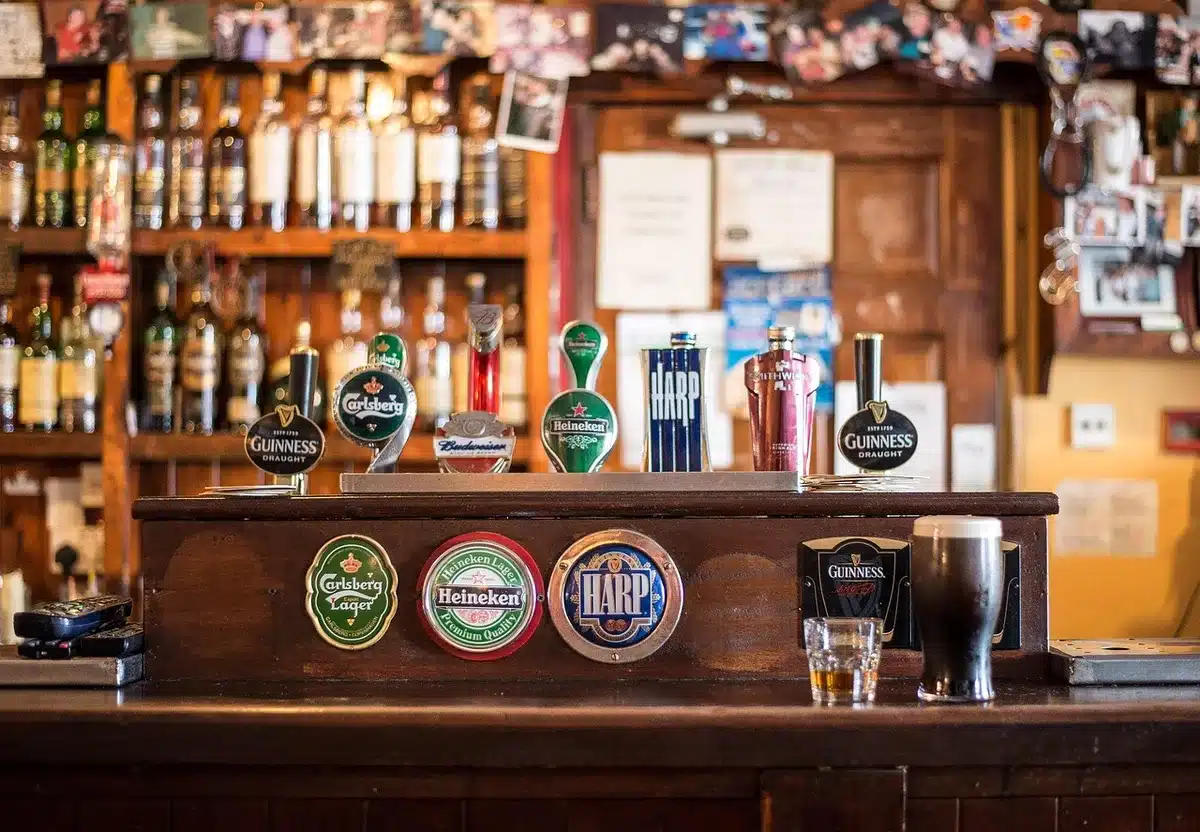
Trade was a key topic in Martin’s discussions with Trump. During the U.S. president’s visit to his Doonbeg resort in County Clare, Ireland, Trump told a crowd he intended to lift tariffs on Irish whiskey. Martin said he raised the issue directly with Trump and that officials from both countries are now meeting to work out the details.

“Yeah, I think there’s a bit of work to be done now. But they will follow through on President Trump’s commitment. Officials are now meeting with officials here in the U.S.,” Martin said, as reported by FOX Business. He said he argued Irish whiskey should receive the same treatment as Scotch whisky, noting he had recently visited the Tullamore D.E.W. distillery and referenced Irish golfer Shane Lowry — whom Trump presented with the trophy at the event — as someone whose local ties “really concentrated his mind.”
Martin stressed the whiskey pledge reflected the close economic relationship between Ireland and the United States and said he appreciated the president’s “courteous and facilitative” approach during visits.
Other possible benefits for Irish exports
When asked if other Irish products might benefit from tariff relief, Martin mentioned Kerrygold butter. Kerrygold is a leading butter brand in the U.S.; its owner Ornua reported that the brand generated more than $1 billion in U.S. retail sales in 2025, a figure Martin used to underscore the commercial stakes of tariff arrangements.
Martin said he has invited Trump to return to Ireland for next year’s Ryder Cup at Adare Manor, seeing further visits as opportunities to strengthen ties. Asked whether another visit could produce another trade breakthrough, he smiled and replied, “You never know.”