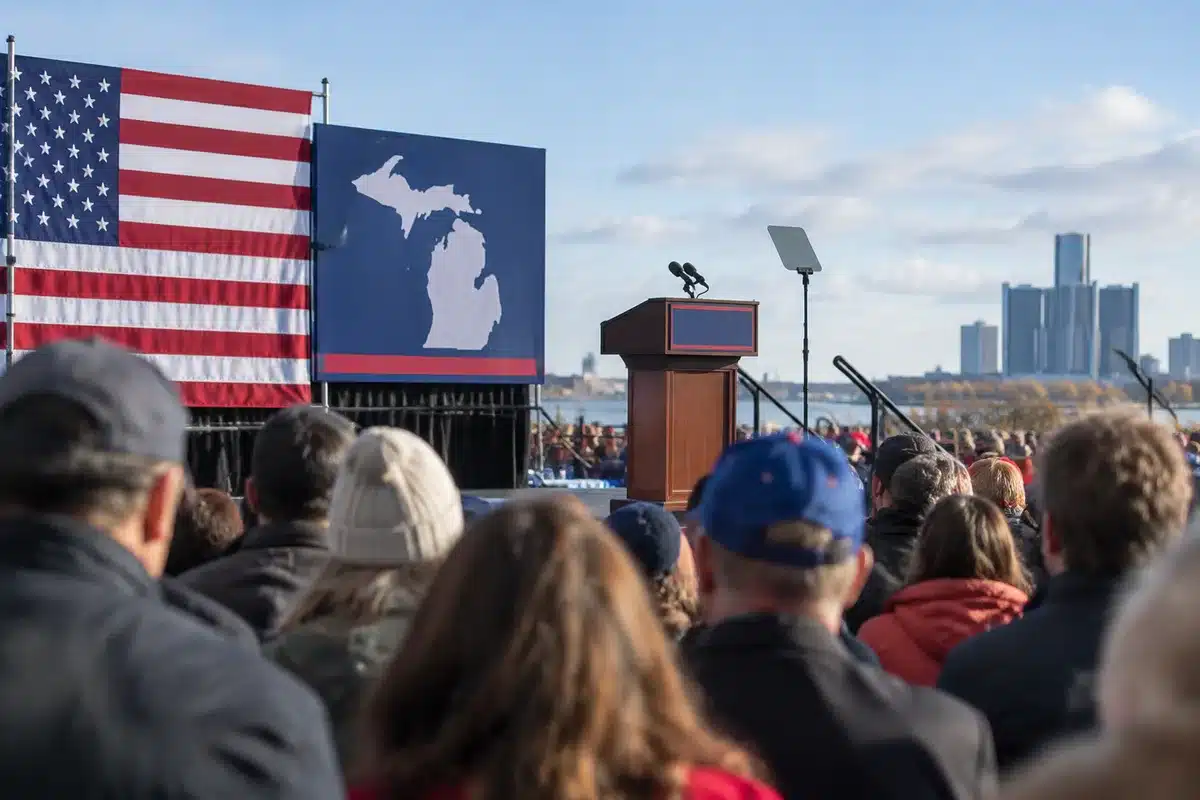
Sen. Bernie Sanders (I-Vt.) and the American Israel Public Affairs Committee (AIPAC) traded sharp public remarks Thursday after AIPAC donated to Republican Michigan Senate candidate Mike Rogers and began spending heavily in the race, according to posts on social media. Sanders accused the lobbying group of exerting undue influence over U.S. foreign policy and linked its activity to military action and civilian harm abroad.
On Thursday, Sanders wrote that “AIPAC is now spending as much as $9 million against Abdul El-Sayed. AIPAC is why we’re at war in Iran. AIPAC is why the U.S. has supported genocide…” The comments framed the PAC’s financial involvement in the Michigan contest as part of a broader critique of its role in shaping Washington’s stance toward the Middle East.
The donations at the center of the dispute went to Mike Rogers, identified in the posts as a Republican candidate in the Michigan Senate race. Sanders singled out the PAC’s spending against Abdul El-Sayed, who has been named as a target of the group’s advertisements and spending, and tied those actions to larger foreign policy outcomes. The posts do not provide independent proof of the causal links Sanders asserted, and his statements are presented as his opinions and allegations.
DCCC seeks ads criticizing GOP approach to AI and data centers across dozens of House races
Clock shows 2:57
Why the exchange matters
The confrontation highlights an ongoing national debate about the influence of powerful political action committees and interest groups on both domestic elections and foreign policy. AIPAC, formally the American Israel Public Affairs Committee, is widely known as a major pro‑Israel lobbying organization; involvement by such groups in close races often prompts scrutiny over whether outside spending shifts electoral outcomes or policy priorities.
Sanders’ comments are consistent with his long‑running criticism of what he describes as outsized influence by wealthy interest groups on U.S. policy. By tying AIPAC’s electoral spending to matters such as military engagement and alleged support for atrocities, he broadened the dispute beyond Michigan politics into a question of how interest‑group activity intersects with national security decisions.
The exchange also underscores how contentious campaign seasons can become vehicles for wider political arguments. Large independent expenditures, such as the figure Sanders cited, can alter advertising landscapes in key states and draw national attention to local contests. Candidates targeted by well‑funded groups often respond by trying to reframe the message or highlight outside influence on their opponents.
Thursday’s online back-and-forth is one episode in a longer pattern of public disagreements between progressive critics of Israel policy and organizations that advocate for strong U.S.-Israel ties. Those disagreements surface in congressional debates, presidential primary campaigns and now, as this episode shows, in state-level Senate contests where outside money plays a prominent role.
Sanders’ post presented his views as factual assertions about AIPAC’s causes and consequences; readers should note those remain his characterizations and were made in the context of a political dispute over spending in a Michigan Senate race. The posts identified AIPAC’s spending target and the recipient of the PAC’s donations but did not include a direct statement from AIPAC in the excerpts cited here.
As the Michigan contest proceeds, the intersection of outside spending, assertions about foreign‑policy influence and partisan messaging is likely to draw continued attention from voters and political observers. Thursday’s exchange is a reminder that national advocacy groups can become flashpoints in localized campaigns, particularly when competing narratives about U.S. policy and international events are involved.