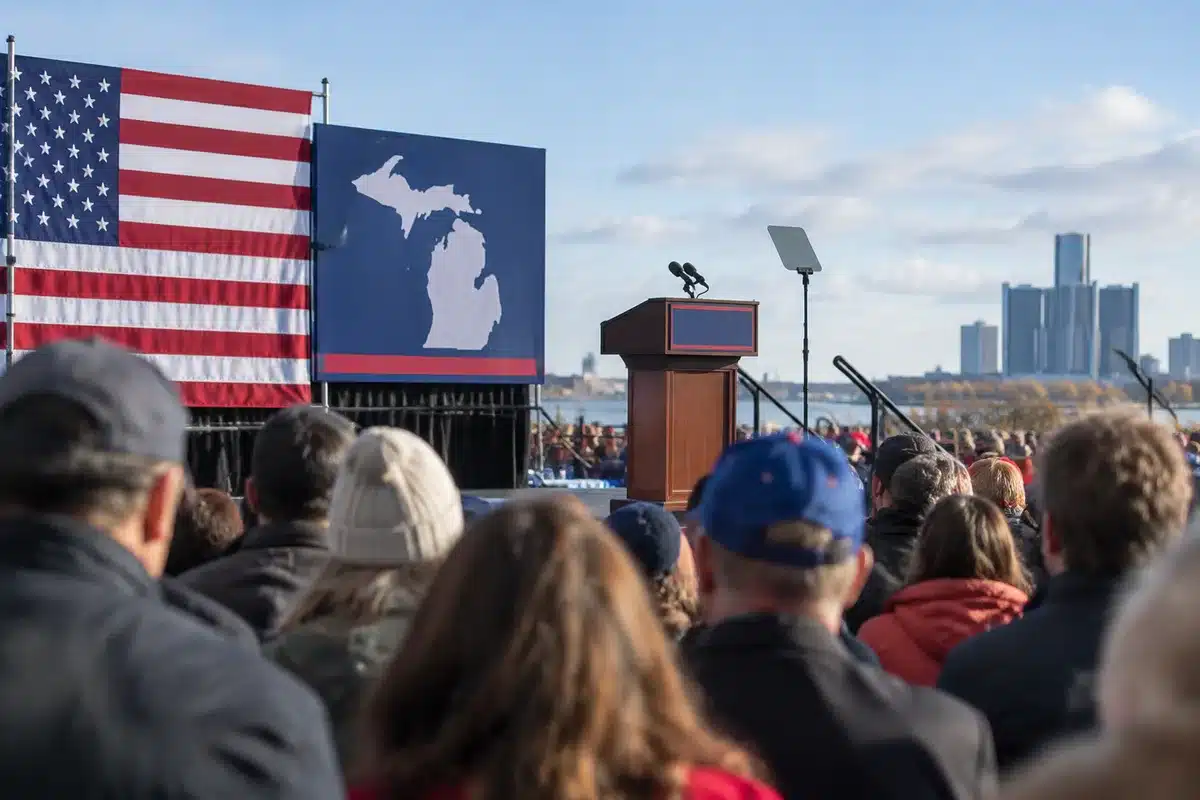
In a column, David Winston, president of The Winston Group and a longtime adviser to congressional Republicans, warns that President Donald Trump’s recent national address missed a timely opportunity to make the economy the central message for GOP campaigns with slightly more than 100 days left before the election.
Winston argues the speech — largely focused on the proposed SAVE Act and election integrity — distracted from what he says is the issue voters care most about: cost of living and economic conditions. He writes that the SAVE Act “isn’t likely to pass this year,” and that even if it did, many provisions “couldn’t be implemented in time for the 2026 congressional elections,” framing the law as a lower-priority topic compared with immediate pocketbook concerns.
According to Winston, the timing was particularly unfortunate because recent economic data offered a potential political opening. He notes that the June Consumer Price Index released by the Bureau of Labor Statistics showed a decrease in gasoline prices that pushed down overall consumer inflation, and that steady wage growth in the same period improved the gap between prices and wages. Winston characterizes those Bureau of Labor Statistics numbers as a welcome improvement after several months of higher inflation tied to the war in Iran.
DCCC seeks ads criticizing GOP approach to AI and data centers across dozens of House races
Clock shows 2:57

Winston lays out the trajectory he sees in the inflation-wage gap: he writes that during President Joe Biden’s tenure prices outpaced wages by 4.8 percentage points, a gap that he says was handed to Trump and had fallen to 2.7 points by January of the following year. He adds that the margin widened to 5.3 points by May amid rising gas costs, but that the June BLS data showed the gap narrowing again to 4.4 points. All of these figures are presented by Winston as context for his contention that the president had an opportunity to sell concrete economic gains to voters.
Winston also recalled the 2018 midterm campaign as a cautionary example of misreading what voters want to hear. He cites a strong Bureau of Labor Statistics unemployment report released the Friday before the 2018 election and quotes Jared Bernstein — described in the column as having chaired the U.S. Council of Economic Advisers from July 2023 until the end of Biden’s presidency — as calling it “pretty much everything you could want in a monthly jobs report.” Winston writes that Republicans nevertheless closed on immigration that year instead of the economy, and that the party lost 41 House seats as a result, with notable drops among women and independent voters.
Drawing the parallel to the present, Winston says last week’s address felt similarly mistimed: an important subject, election integrity, but not the right centerpiece while gas prices and the Iran war remain dominant voter concerns. He warns that if Republicans fail to make the economy their primary message, Democrats could prevail in November and shift the next two years toward investigations and impeachment rather than continued focus on private-sector economic initiatives he credits to last year’s “Big Beautiful Bill” extension of the 2017 tax cuts.
Winston’s prescription is straightforward: he urges the president to prioritize the economy in communications to the electorate and to explain how policy choices and international developments — including the Iran conflict — affect household costs. He emphasizes that “the base alone won’t win the election” and that persuading women and independents is crucial, a point he says should shape messaging between now and Election Day.
David Winston, who wrote the column, is the president of The Winston Group, has served as director of planning for Speaker Newt Gingrich and advises corporations and nonprofits on strategy and public policy. He also serves as an election analyst for CBS News. The views expressed in the column are Winston’s opinion and reflect his analysis of political strategy and economic data.