
Show summary Hide summary
British high streets and shopping centres are increasingly borrowing the look and feel of American food courts as U.S. casual and fast-food chains pursue growth across the Atlantic. The trend reflects a mix of factors — from appetite for familiar brands among younger shoppers to franchise investors chasing proven formats — and it is changing the choice and layout of places where people eat in towns and cities across the UK.
Some of the chains attracting the most attention are already established in Britain, while others are the subject of repeated reports, franchise filings or pop-up trials that suggest further expansion could follow. The pace, scale and geographic pattern of growth vary by brand: some pursue inner‑city flagship sites, others target leisure parks, outlet centres or suburban high streets, and many rely on local partners for franchising and property deals.
Nine U.S. chains often linked to U.K. expansion
DCCC seeks ads criticizing GOP approach to AI and data centers across dozens of House races
Clock shows 2:57
- Five Guys — A fast‑casual burger chain that has a visible presence in several British cities and is frequently cited as an example of successful U.S. casual dining translating to the U.K. market.
- Shake Shack — Known for premium burgers and shakes, Shake Shack has opened multiple sites in London and is often mentioned in discussions about U.S. brands that adapt their formula for British diners.
- Krispy Kreme — The doughnut retailer has a recognizable footprint in the U.K., demonstrating how U.S. dessert and snack specialists can build broad retail distribution alongside shopfronts.
- Taco Bell — As a large U.S. Mexican‑style chain, Taco Bell’s formats and price positioning make it a natural fit for food courts and high‑footfall locations in British towns.
- Popeyes — The fried‑chicken brand has been the focus of expansion reports and pop‑up activity, reflecting strong global demand for chicken specialists.
- Chick‑fil‑A — Best known for its chicken sandwiches, the brand’s international moves and occasional U.K. presence in non‑permanent formats have kept it in the conversation about potential wider entry.
- Wingstop — Specialising in wings with flavour variations, Wingstop is an example of how niche U.S. concepts can scale through franchising and food‑court locations.
- Dunkin’ — As a large coffee-and-donut chain, Dunkin’ illustrates the category competition for coffee and grab‑and‑go breakfast trade alongside established U.K. operators.
- In‑N‑Out — Although historically cautious about international growth, In‑N‑Out is often cited in media and investor conversations as an iconic U.S. burger brand consumers would welcome if it expanded more broadly overseas.
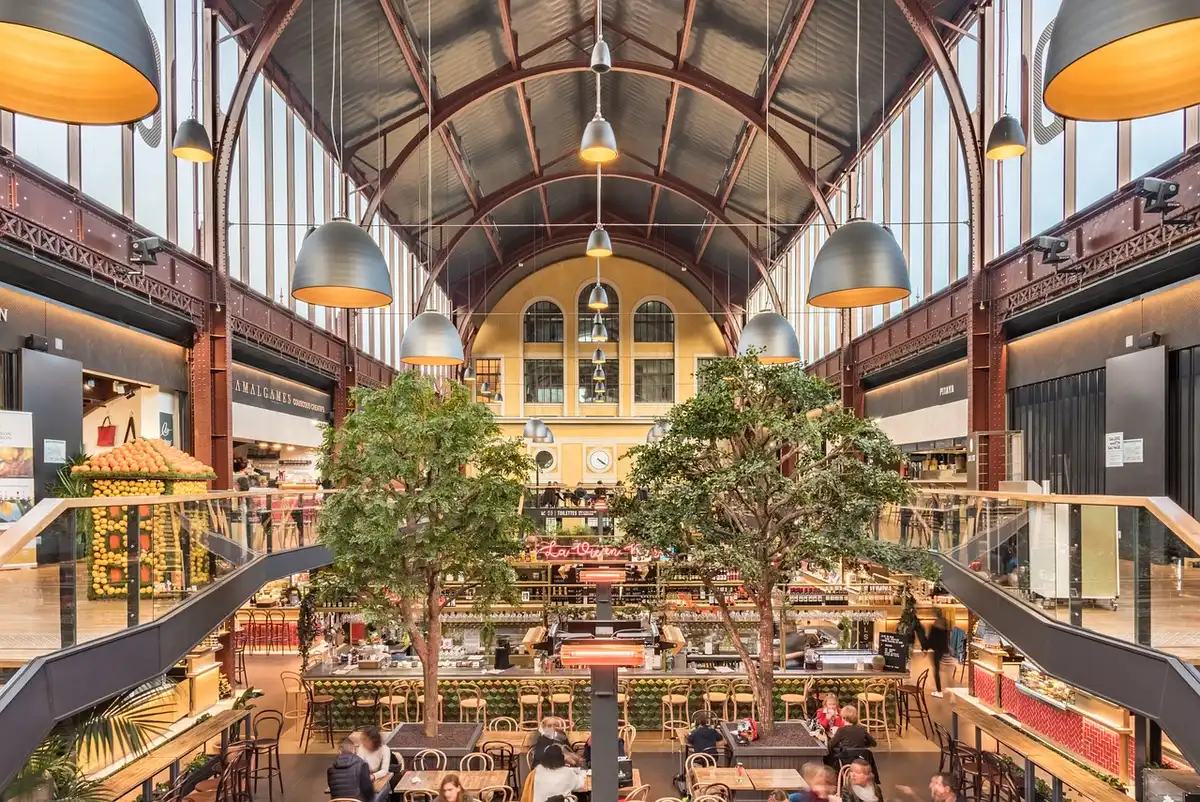
These examples span different segments — burgers, chicken, wings, tacos, donuts and coffee — and that mix helps explain why British retail and leisure sites are beginning to resemble large-scale American food courts. Operators favour formats that work well in shared dining halls and high‑turnover sites: compact kitchens, standardised menus, strong delivery and click‑and‑collect capability, and brand recognition that reduces the need for heavy local marketing.
Why U.S. formats are appealing in the U.K.
There are several practical reasons behind the shift. Many U.S. chains operate franchised or partner‑led models that reduce the capital required to enter new markets; landlords and developers are increasingly open to multi‑operator food halls to drive footfall; and consumers — particularly younger cohorts — trade up to novelty or “Instagram‑friendly” formats that promise consistency and sharable moments.
At the same time, local adaptation matters. Successful rollouts in Britain tend to combine the recognisable elements of a brand with menu tweaks, pricing adjustments and site choices tailored to British habits and regulation. Where chains rely on local franchisees, the partnership quality can determine speed and geography of expansion.
Not every U.S. chain will follow the same path: some will prioritise flagship stores and brand-building, others will scale through concessions, and some may limit their footprint after testing demand. Company announcements, lease filings and reports from franchise partners are the most reliable signals that a particular brand plans a concrete push into the U.K.
Readers interested in a specific chain should look for official statements from the companies involved or announcements from local franchise partners and developers to confirm openings and locations, since the status and presence of these brands in Britain differ and can change quickly.