#Guerrilla

Gustavo Petro, the great outsider of Colombian politics

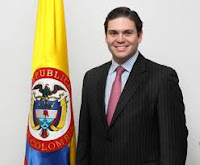
Gustavo Petro on the campaign trail, photo La Silla Vacía

The red flag was hoisted high above the Lievano Palace in Bogotá on the afternoon of 1 January, announcing the official start of the Gustavo Petro era.

Petro, once a hard-line ultra-left guerrilla militant, has morphed into a populist, centre(ish)-left elected mayor, in charge of Colombia’s capital city.

Until a fortnight ago, Petro had only known life as an opposition politician. He now has the second most important job in the country. Critics complain that he lacks the experience necessary to run a city of 8 million souls, and that he is an ideologue, not an administrator. Supporters respond that he is a principled man with strong beliefs, who has brought together a cabinet of wise heads.

After years of relentlessly attacking those who held the reins of power, Petro has four years to prove he knows what to do now they’re in his hands.

Petro has started his time in office as those on the right fear he intends to carry on. His first address as Mayor was unmistakably of the left. Those that crowded into Bolivar Square to see their leader sworn in, heard how his government will tax the rich, how it will plough the money into public services, providing free education and drinking water for the poor, and how it will levy taxes on motorists to fund cheaper ‘more accessible’ public transport.

In Europe these policies would be called ‘old left’. Since taking office, however, Petro has shown he is equally at home with ‘new left’ ideas. He has borrowed from the modernising left movements that swept through Spain and the UK in the early 2000s.

Petro, like a Colombian Tony Blair or Jose Luis Zapatero, has committed his government to the pursuit of ‘equality’, openly embracing positive discrimination. Marking the sand, Petro in a highly symbolic act appointed women to half his cabinet positions.

Not content to stop there, he has now moved onto the territory of political correctness. Last week Petro set about dismantling centuries old tradition by seeking to end bullfighting in the capital. It was not appropriate for a city in the 21 century to applaud and make a spectacle of violence and death, he argued.

This way of thinking is new for Colombia, a deeply conservative and traditional country. Petro is setting about on a quiet revolution. He hopes to bring about social change, a shift in values, and a re-calibration of Colombian politics. The right and the church have dominated political discourse. Petro wants to present an alternative. As he puts it – socialism and love.

It is no surprise that there are those in Colombian politics who are frightened of Petro, not just because of his politics, but also as a result of what his personal story represents for the future of the country. Petro’s background promises to revolutionise the country even more than do his politics.

Unlike most Colombian politicians, Petro’s blood is not blue. Colombia has tended to be run by an elite, a governing class. Looking at Petro’s family tree you do not see generations of former senators, governors or presidents. If Petro is a success as mayor, his narrative of commoner turned political leader becomes a dangerous precedent for those who currently run the country. Could he encourage power to begin slowly to shift from the governors to the governed?

Petro’s genetic background ensures he is a political outsider. And by appearing to move to centre, Petro is now an outsider within a Colombian left that has marched en masse into the wilderness of untempered socialism. But most interesting will be Petro’s relationship with the national governmenFor now Petro is an independent in a country of consensus. President Santos’ coalition government controls over 90% of the Congress. But the coalition’s reach is felt at all administrative levels. The local and regional elections at the end of October were seen as a major success for Santos.

Of the 32 new governors, sworn in on 1 January, 17 belong to coalition parties, as do over half of the 1,100 new mayors. In some cases – like that of Cali’s new mayor, Rodrigo Guerrero, even candidates elected on non-coalition platforms are also unofficially linked to the government. Semana, Colombia’s intelligent weekly publication, have suggested that never before have the national and regional governments been more closely aligned.

There is nothing necessarily troubling in all this, President Santos’ reforms are the right ones for the country, and he desperately needs local politicians on his side to make the policies a reality, and to deliver his land restitution plan. But such a lack of opposition cannot for long be healthy.

In this context, Petro is almost uniquely positioned to present the country with an alternative prospectus – one that in the future he may choose to put forward as a presidential manifesto.

Even for those instinctively against his way of viewing the world – like the author of this website – Petro should not represent a threat. Colombia desperately needs more outsiders. Opposition is necessary for a participatory and more mature democracy. Petro represents large sections of Colombian society, it’s a good thing for the country that he is heard, and given a chance to govern, even if he fails.

FARC leader’s death – victory for Santos and Colombia

Alfonso Cano, photo AFP

Two nights ago my sleep was interrupted by the unmistakable buzz and whir of military helicopters as they circled overhead, bringing the cadaver of FARC leader ‘Alfonso Cano’ to a morgue in the city of Popayan, southern Colombia.

For days my hotel, close to the city’s airport, has rattled to this now familiar sound as the Colombian air-force set off on sorties into the guerrilla heartlands in the virtually impenetrable nearby mountain terrain. By Friday these excursions had delivered a devastating blow, decapitating the FARC of its Marxist commander-in-chief. Operation Odyssey ended the years long search for ‘Cano’, the most wanted man in Colombia.

The removal of alias ‘Alfonso Cano’, supreme leader of this band of terrorists, is victory for the military, for peace, and politically, for President Santos. But is also another step forward for Colombia as a nation, in its development and also its image internationally.

President Santos’ political victory – over the critics

Critics had begun in recent months to complain that Santos had gone soft on the FARC; that he had abandoned the hard-line policies left to him by his predecessor Alvaro Uribe. But Santos has now, within little more than a year of taking office, successfully taken out both the top military commander, ‘Mono Jojoy’ and the chief intellectual/ideologue and overall leader of the FARC, ‘Alfonso Cano’. He has delivered two overwhelming blows to the head and heart of the FARC.

The eight years of Alvaro Uribe’s presidential rule between 2002 and 2010 were the toughest the FARC had had to endure. Uribe was elected promising to bring about what he called ‘democratic security’, an end to the terrorist’s tyrannic reign. Uribe inherited millions of dollars of US aid secured as part of the Plan Colombia agreement signed by his predecessor Andres Pastrana, and US President Bill Clinton. Uribe threw this money into the fight against the terrorist group.

The largely successful eight year military campaign forcibly released the FARC stranglehold in large swathes of the country, took out key commanders and middle-ranking officers, and foiling planned attacks. Perhaps the most eye-catching strike against the FARC under Uribe’s watch, was the death of ‘Raul Reyes’ in an operation carried out in Ecuadorean territory in 2008. ‘Reyes’ was the first member of the FARC’s ruling secretariat to be killed in action. His death was hailed as precipitating the start of the end for the FARC.

During the latter years of Uribe’s presidency, President Santos was his defence secretary – Santos was in charge of the operation that brought about the death of ‘Raul Reyes’. Since taking office, however, Santos has charted a different course to his old boss. The Santos regime’s narrative has focused most notably on economic growth and restitution for those displaced by conflict. Opponents had begun to assert that Santos had ignored – even overseen a debilitation of – Uribe’s democratic securities policies.

They cited the increase in FARC activities over the course of the last months, and more recently the death of 27 soldiers in such attacks, as evidence that Santos’ resolve is not that of Uribe. These complaints had begun to stick. In August Santos opted to reshuffle his government replacing defence secretary Rodrigo Rivera with his erstwhile chief of staff Carlos Pinzon – Santos was bringing the fight against the FARC once more under his wing. However, this had little effect in quieting the critical voices.

The death of the ‘Alfonso Cano’, who had been closely pursed by the Colombian military in recent months, however, puts pay to the myth that Santos has dropped the security ball. Santos, in fact, as defence secretary and now as president, has delivered the biggest military victories against the FARC. Some will say he has even surpassed the successes of Uribe.

Operation Odyssey has not only dealt a major blow to the FARC, but also to Santos’ critics. He will – for a time, at least – occupy the moral high-ground in future debates on security policy.

A peaceful end to the FARC’s fight?

The FARC has sustained major wounds, it is a military corps limping to its death. The final blow is, however, yet to be struck. Five of the leading guerrillas have fallen in recent years, its numbers have dwindled, killed in action or lost to defections, and it has been driven back into ever more remote territories – yet it remains a force, a threat. No doubt the FARC will regroup, and launch new attacks in the coming months. But the troops will have been demoralised by the death of their commander-in-chief.

But will this force the FARC to the negotiating table? President Santos argued that the choice before the militants is demobilise or end up ‘either in jail or in a grave’. He must hope they heed his words.

As previously reported on this website, the Santos regime is working to establish a peace process, and transitional justice system. The central tenet of this process is the offer – to the guerrillas – of an alternative to their current plight. The hope must be that combatants look to the fact that the mayor-elect of Bogotá, Gustavo Petro, himself an ex-guerrilla, demobilised and is now fully incorporated into active political life.

The prospects for peace will depend on who the FARC decide should lead them now their key ideologue is dead. Cano was an intellectual leader, of the upper middle class of Colombian society. His was an ideological fight (to overthrow the government and install a Marxist state). Appearing to see a potential political end to the battle, he spoke in recent months of the possibility of entering into a peace process; words that were, however, backed up with precious little action.

Should the FARC elect another ideologue like Cano then peace could be a few steps closer. The alternative, taken from the military, drug-trafficking wing, would threaten to postpone or push back the day when eventually the bell tolls for the armed struggle. We await the puff of smoke from deep within the Colombian jungle.

Colombia’s image abroad

Rewind ten years and Colombia’s image abroad was just about as unfavourable as is possible. International investors and tourists alike gave it a wide berth. Too high was the risk. This began to change under President Uribe. As documented elsewhere on this website, FDI and tourist numbers have risen exponentially, while GDP has doubled over this decade. Colombia is a now seen as a safer, more stable bet than many of its neighbours. It is a market emerging on the world stage.

The death of ‘Alfonso Cano’ generates yet more confidence in the country. The Colombian government is showing the world that it is willing and able to fight – and beat – the FARC. It is strengthening and stabilising the nation’s democratic institutions.

President Santos’ favourite word is ‘governability’. For too long Colombia was ungovernable. With every step towards a peaceful end to the conflict the greater the ability the government has to invest in building the future of the country. Ending the conflict is, for Santos, not the end game but it is a step necessary to secure his vision for the country. The world should wish him well.

Politics – The Killing Game

I was reminded of this article by the news today that the Defence Minister Rodrigo Rivera resigned citing a decline in the security situation and a rise in FARC activity. Security could yet be the defining issue of the Juan Manual Santos regime. It would be an irony indeed.
Santos came to power largely due to the support of ex-President Uribe. Santos appeared to promise – while running for election – a continuation of the Uribe doctrine. This doctrine placed security at the heart of everything. Uribe was hailed as the president who improved security in the country, and in doing so, transformed the image of Colombia abroad.
Once in power, however, Santos decided to chart a very different path from that of his predecessor. Santos presented himself as the post security president. His argument was simple – that the country had other problems to solve. And setting about solving these problems has made Santos a popular president. Since assuming the throne in August 2010, Santos has consistently enjoyed support in the 80%.
However, in recent months, attention has started to turn once more to the issue of security, and blows against the Santos regime are starting to land.
Pinzon – the patriot
All eyes, then, are on the new Defence minister, and what he does to calm his compatriots’ insecurity. Santos himself of course was Defence minister in Uribe’s government. The president must now hope that the new minister Juan Carlos Pinzon does for the Santos government what Santos did for the Uribe government. JMS will need to have faith in his new man. Pinzon’s appointment is unsurprising – he used to be the president’s chief of staff.