


Colombia Politics has compiled a short list of our favourite books published in the last couple of years.
1. Las Reputaciones, Juan Gabriel Vasquez
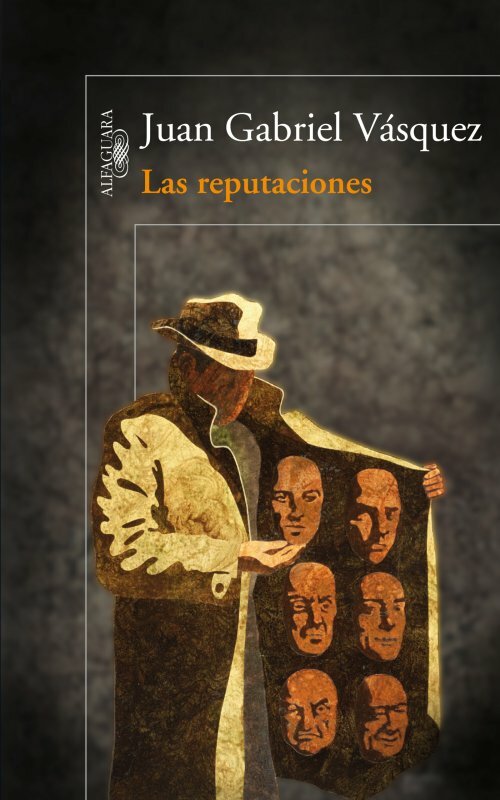 For us Juan Gabriel Vasquez is one of Colombia`s finest writers. This year he released two books. “The Sound of Things Falling”, was translated into English this summer, while “Las Reputaciones” (in Spanish) hit our bookshelves for the first time, this autumn.
Javier Mallarino is a leading political caricaturist in Bogota, he has the political class at his knees and enjoys unrivalled power and influence.
Vasquez takes us into the mind of Mallerino as a moment from his past haunts him and threatens to unravel his carefully crafted image.
Las Reputaciones explores the role and power of opinion formers, of how society is governed by reputations, their creation, preservation or destruction.
Vasquez`s writing is almost always obsessed by memory and the interplay between the past and present. This beautifully written work reminds me of the British author, Ian McEwan`s ability to spin a story around the orbit of a specific moment in time.
2. The Robber of Memories, Michael Jacobs
Colombia Politics reviewed Michael Jacobs` spell-binding journey up the Magdalena river earlier this year.
The editor was fortunate enough to spend a couple of days with the author to discuss his work and his views on Colombia; The Robber of Memories has stayed with us throughout 2013.
The Robber of Memories is an adventure to the source of the Magdalena that takes us through the land of García Márquez, into the paramilitary strongholds of the Magdelena Medio and finally up deep into the mountainous FARC-held territories of Huila, near San Agustin.
It all begins with a chance meeting with García Márquez in a packed drinking den in Getsemaní, in Cartagena and ends with, well, more than Michael had bargained for; a chance encounter with the FARC.
Great travel books encourage us to set off and to learn.
The Robber of Memories is a literary, political, humorous and great read. Jacobs´ love affair with Colombia is poignant, and a reminder that life is there to be lived. Great if you`re home, it`s winter and you`re longing for change and adventure.
3. Memorias Olvidadas, Andres Pastrana
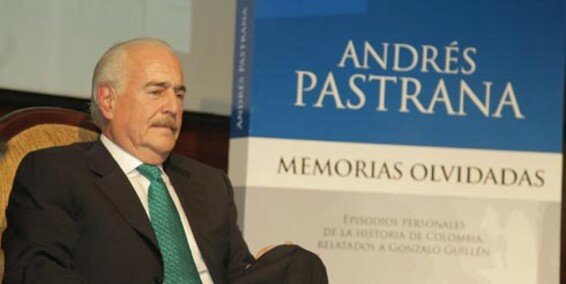 President from 1998 to 2002, Andres Pastrana`s memoir of his life in politics is a fascinating insight into the troubled Colombia of the 90s and early 2000s.
Pastrana recounts his kidnapping by Pablo Escobar and reveals the truth behind the “proceso 8000”, which implicated the then President Samper with dodgy dealings and campaign funding by the nation`s narcotrafficking cartels.
Pastrana`s account also shows us just how many of the names that were in or around power 20 years ago remain with their knuckles firmly clasped to the greasy pole. Pastrana, himself part of a political dynasty – his father was a former president – appears critical of the elite that has governed the nation for decades.
Memoirs are not as rich a political tradition in Colombia as they are in the US or the UK, so Pastrana`s contribution is welcome indeed.
If you`re not sure who lies behind the current government`s throne, read Pastrana`s book and it will reveal all.
4. Pa` Que Se Acabe La Vaina, William Ospina
 A highly critical and polemic essay from the popular poet, essayist and novelist. Ospina cuts to the heart of Colombia`s failings as a society and a country.
No punches are pulled as the oligarchy he says have made Colombia – one of the most diverse nations on earth – one of the most judgemental and closed peoples (perhaps more than a little unfair) – is systematically destroyed by the sharp anger of Ospina`s prose.
There is plenty of hope and a vision for a better, changed Colombia however; but Ospina is unrelenting in his attacks on what he sees as a self-serving and myopic elite.
Anyone who loves the country will find Ospina`s words stark, but there is no faulting the brave brutality of his position.
The future though is brighter, and change is inexorable. Ospina shows us how Colombians are beginning to demand more of those in charge.
An excellent read if you`re exercised about politics and Colombia`s future.
5. The Sound of Things Falling, Juan Gabriel Vasquez
 Juan Gabriel Vasquez`s most engaging book to date?
The long-awaited translation into English of Vasquez`s highly acclaimed novel set against the backdrop of the Escobar years and the drug trade, has been received with gasping excitement by critics on both sides of the Atlantic.
I haven`t read the translation, but the original is beautifully crafted and thoroughly enjoyable to read. Again there is something in the sharpness and directness of the prose that reminds me of Ian McEwan.
There are cultural observations of life in Colombia that will have you laughing out loud, while others will cause you to reflect on the tragedies of the nation`s past.
Mario Vargas Llosa calls Vasquez “One of the most original new voices of Latin American literature.” I have found it almost impossible to disagree with anything Vargas Llosa has said before. I won`t start here.
Is this Vasquez`s masterpiece? Fortunately he is still young and has a full career ahead of him. A must on anyone`s bookshelf.
6. Lady Masacre, Mario Mendoza
 Mendoza`s work is characterised by the “degraded realism” of his gritty Bogotano novels and Lady Masacre is no exception.
Drugs, prostitutes, paramilitary politics and murder; Mendoza paints a bleak picture of Colombia`s capital and the Dickensian underworld which politics and criminality cohabit.
We follow the story of a journalist turned private detective as he mixes between the “arribistas” of the new rich and down and outs on the streets around the Caracas from 22 down to El Centro.
Mendoza`s observations on Colombian society can be painful, but like Ospina, there is affection and hope.
It`s questionable whether Lady Masacre is literature, and the dialogue is at times too obvious, fitting the clichés of a detective novel. However, it is certainly a fun, dark and salacious read.
Merry Christmas and do get in touch to suggest some more books for us to pick up in January.